SLOUCHING TOWARDS ASWAN:
A Journey Up the Nile
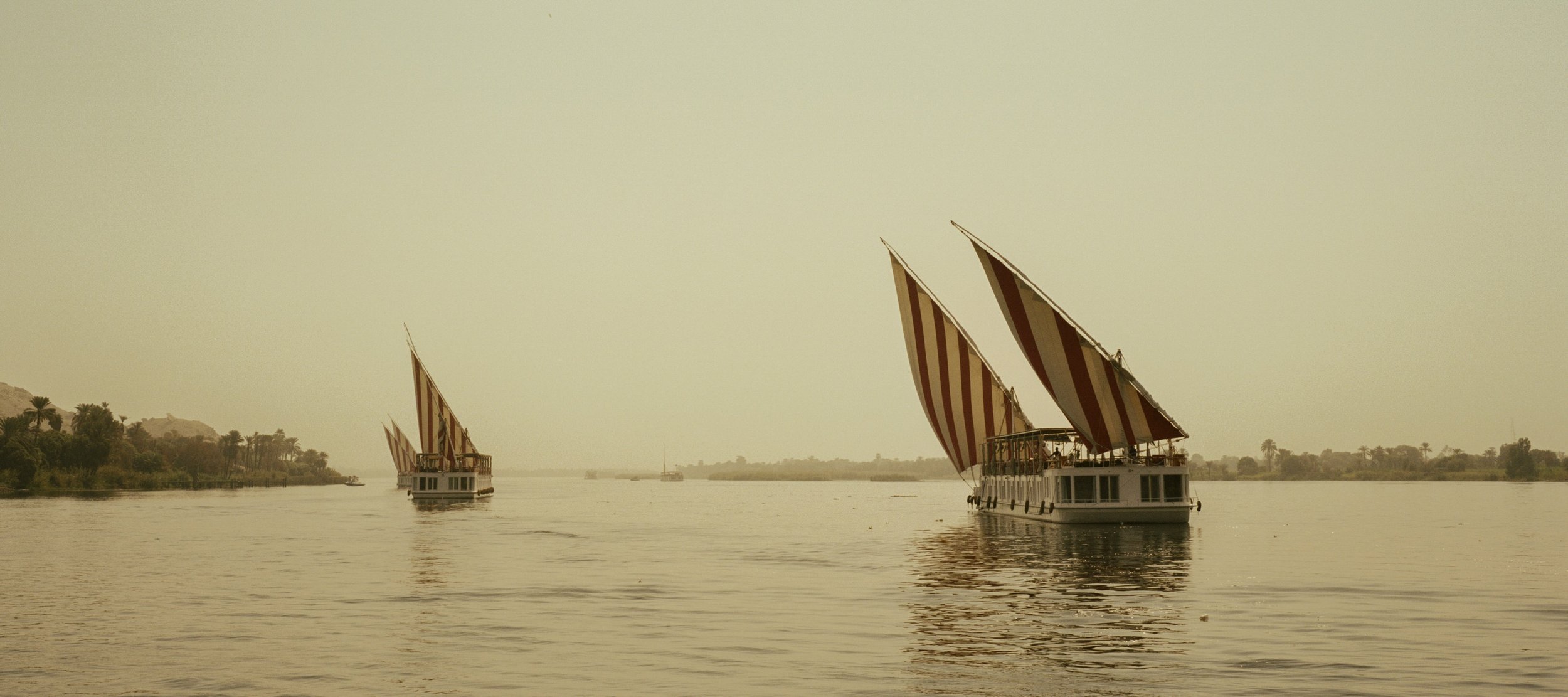
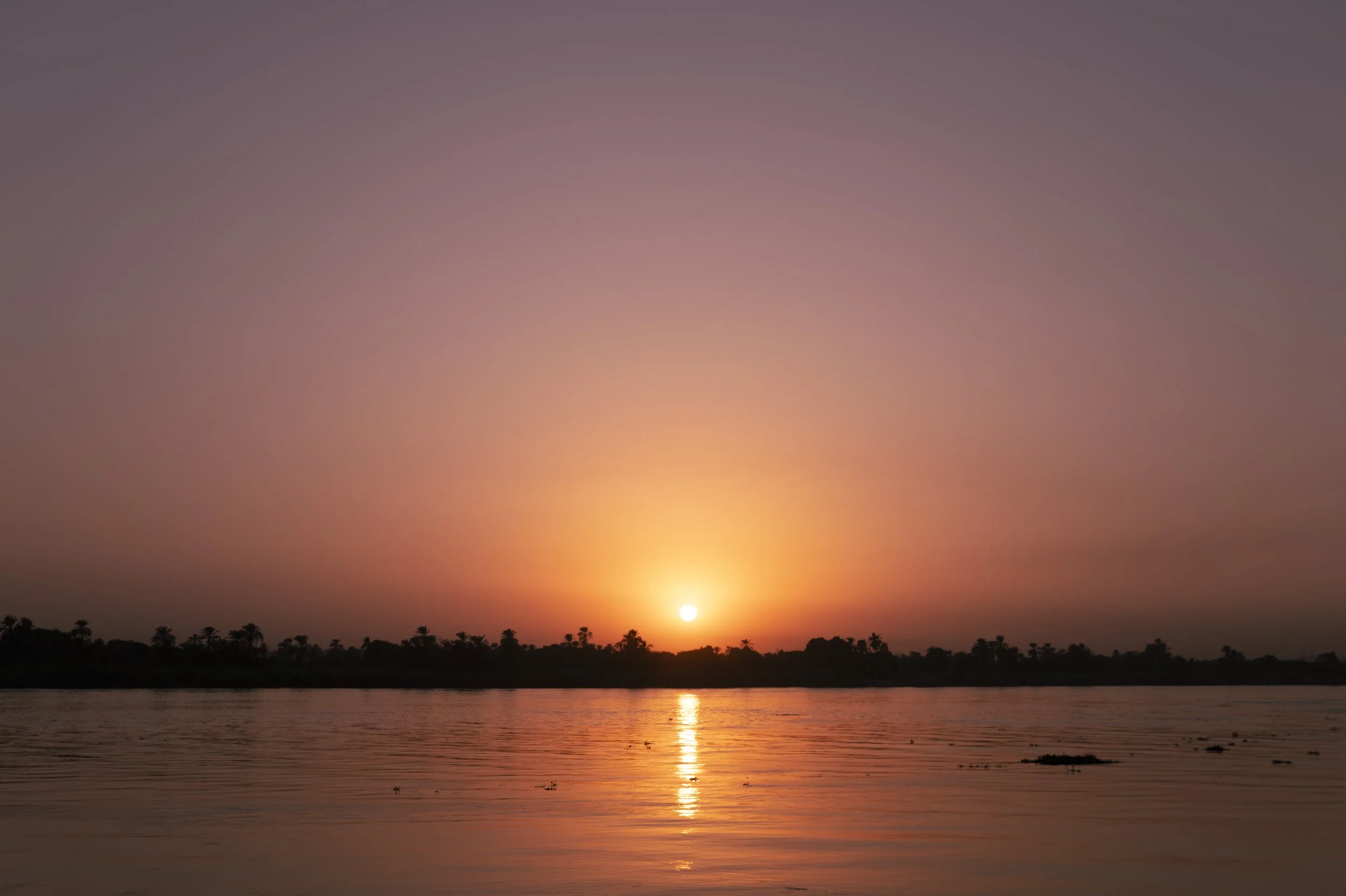
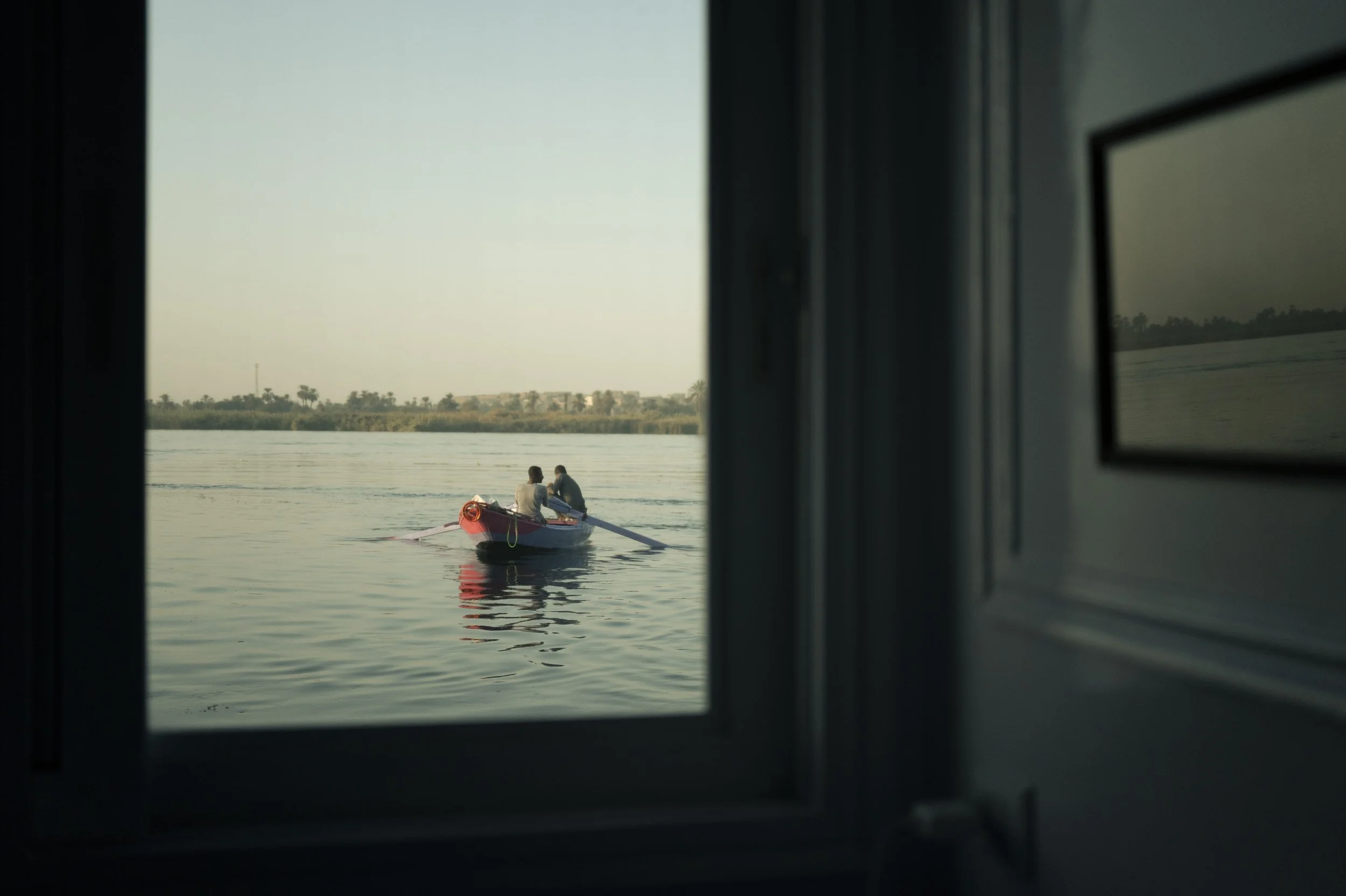
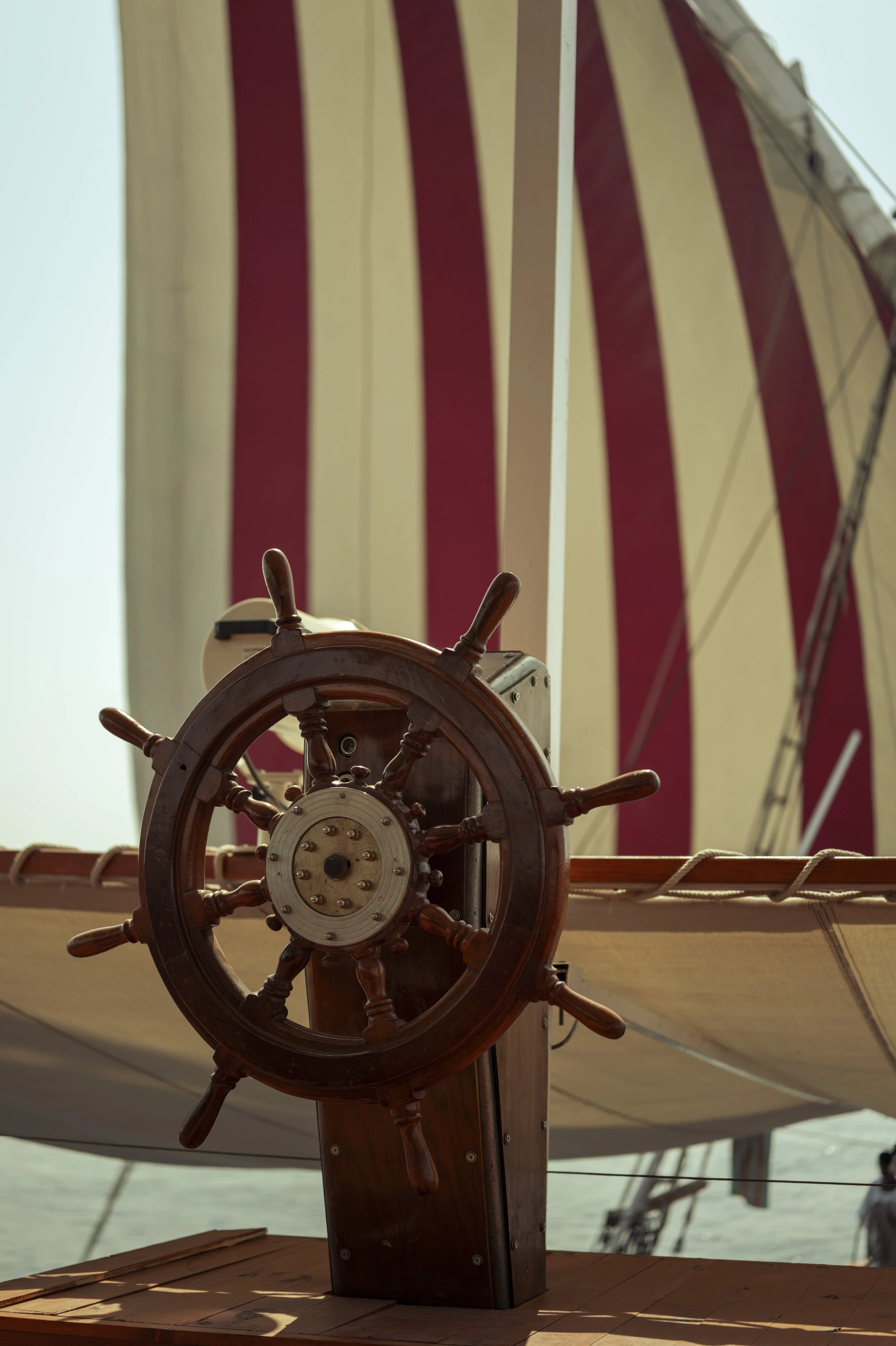
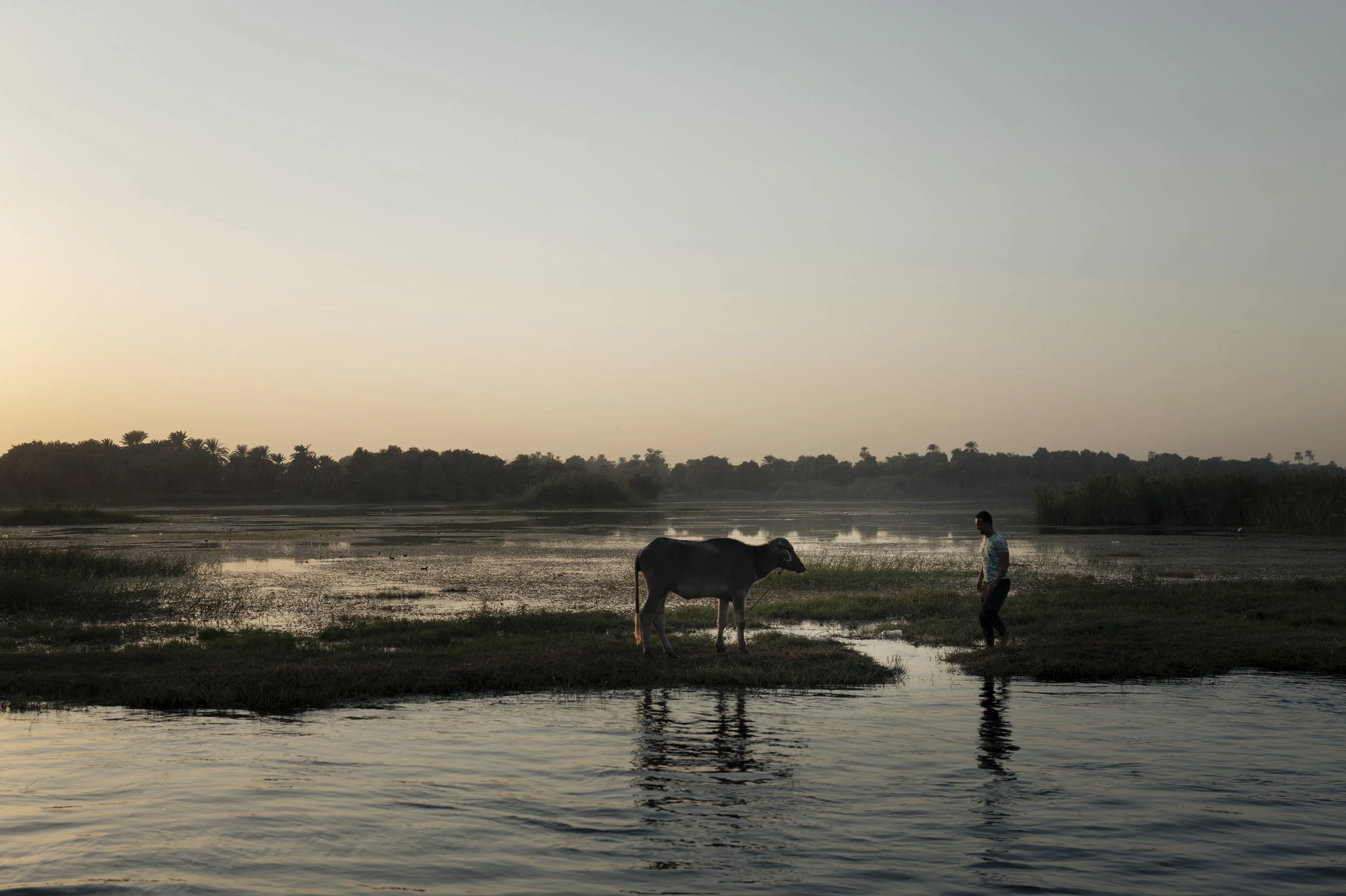
Let me preface this piece by saying there is nothing more magical than awaking at sunrise on a sailboat drifting up the Nile, the gentle water glittering a couple feet below your bedroom window, a glass of fresh mango juice or Turkish coffee awaiting you up on the deck. But let’s work backwards from this point….
The first sign that this won’t be a straight-forward little jaunt is the booking of your flight. Inexplicably, 90% of air traffic coming in from Europe or the US (that aren’t on Egypt Air) arrive and depart Cairo in the dead of night. Like 1:38AM or later. So there’s that. Navigating customs, baggage, and hotel check-in when you’re meant to be in deep REM mode throws you off a bit, especially when you’re slated to commence sightseeing at the crack of dawn the following morning to avoid the massive crowds that start seeping into every crevice of every attraction by 10a.
Also: while a long weekend in Cairo would be good fun and allow you to plunge into the history and culture of the country at a more leisurely pace, what you really want to do is go for the full extravaganza and sign up for a cruise up the Nile (quick note: all boats start in the North in Luxor and then travel down to Aswan but because the Egyptians refer to the Nile by the direction in which it flows—South to North—you say you are going “up” the Nile). However, despite a seemingly unlimited amounts of boats that offer such an expedition, the reality is there is only one boat worth trying to get on and it books up very far in advance. We were not on that boat.
About the boats in general: broadly speaking, there are two types of vessels cruising the Nile. One is a slightly smaller, motorized version of the hulking Caribbean cruise ships. These are operated by everyone from Viking to the luxury hotel chain Oberoi. There’s anywhere from 70 to 200 guests aboard. If you’re into that kind of thing, go for it. But if this is the case, you are then lumped into guided visits of the sights with 70-200 other people. Not ideal. Also: other people are gross.
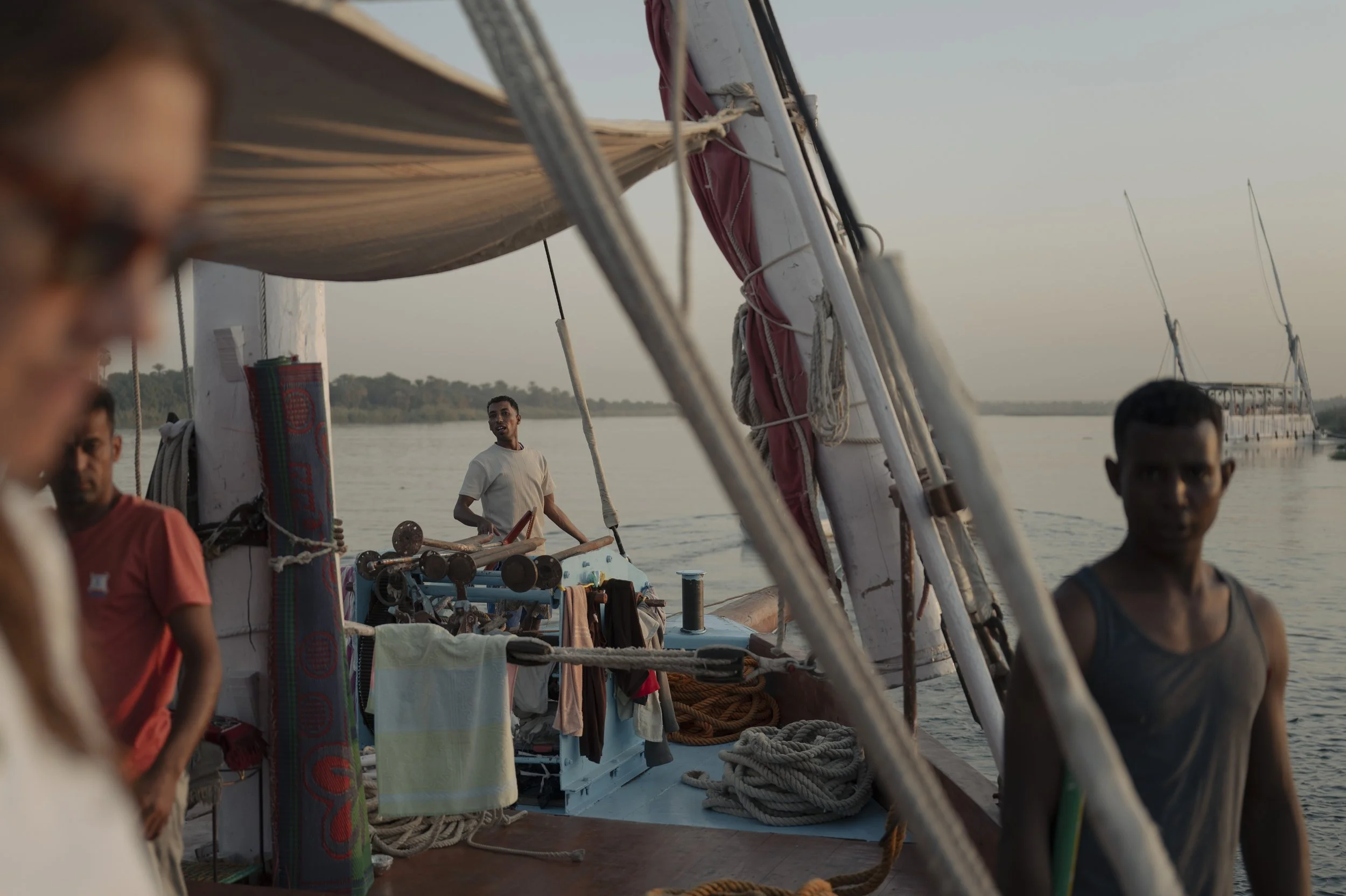
The other type of boat is a multi-masted traditional Dahabiya sailboat and they usually sleep between ten and thirty guests. But even these vessels can be deceiving as the promise of a quiet, motor-free voyage gives way to the reality of not enough wind to propel the ships, leading to their eventual towing by tug boats for the majority of your trip.
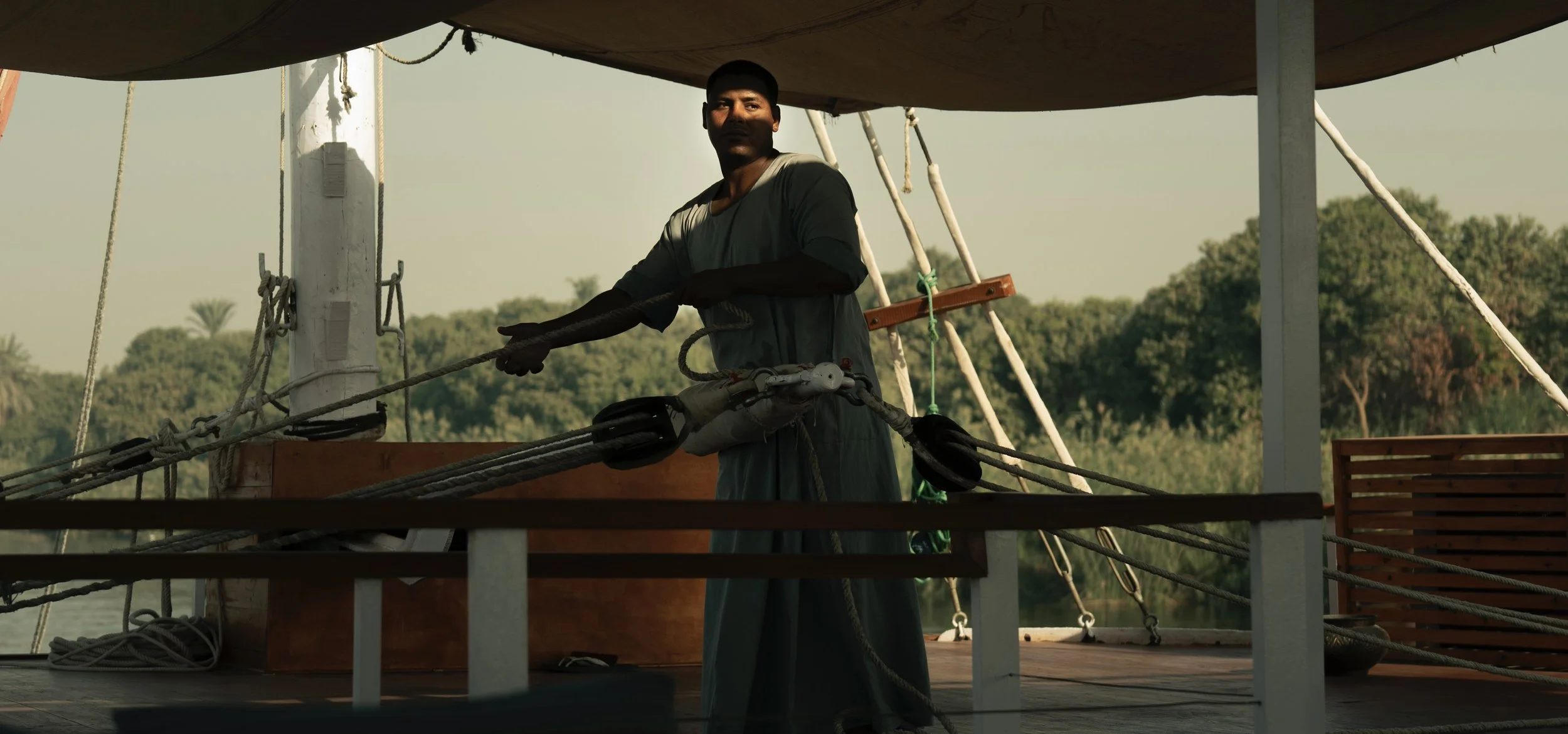
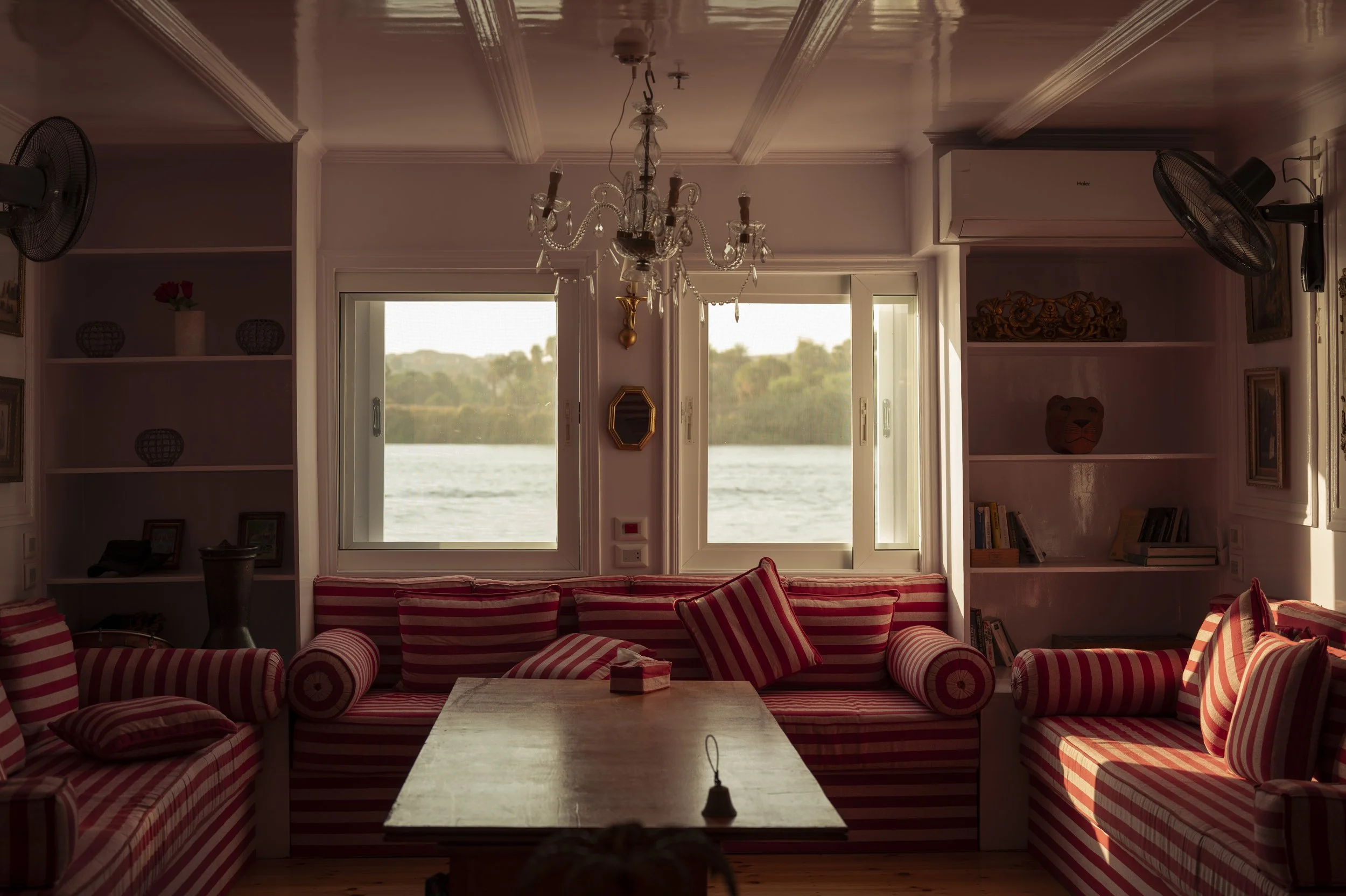
We booked the last room available on one of Nour El Nil’s five 20-passenger boats and it was simply fine. The rooms felt like a cramped set of an early 2000s hip-hop video, so thickly lacquered in white it would have made Hype Williams envious. The bathroom was more in the style of an underfunded hospital in the South or an off-brand airport lounge shower stall. But the staff was incredibly kind, the food delicious (if at times a bit repetitive), and the upstairs deck was the perfect shaded space to spend the day lounging with a book or contemplating a game of chess with your partner.
Which brings me to another point. As we set out on our voyage, a young couple acknowledged the fact that they were squarely falling into a cliché I’d never heard before about Nile travel demographics: “newly-wed or nearly dead”. And it’s true that as excited as we were about sharing the wonders of the ancient world with our 13 year old son, most days aboard the boat broke down into the following: breakfast at 8am, a cultural excursion at 9 followed by lunch on the boat and then nothing until dinner. Unless you’re traveling with three other families and their kids, it’s a lot of free time spent convincing your child to read Agatha Christie’s Murder on the Nile rather than reaching for your iPad. So either go on your honeymoon or do as we should have done and rent out the exceptional, tastefully-appointed Zein Neil Chateau boat from Abercrombie and Kent which sleeps about twelve. You’ll probably have to reserve it a year in advance, but from my research, it seems like the best option by far. And three families’ worth of children will find plenty of good old fashioned mischief to pass the time.
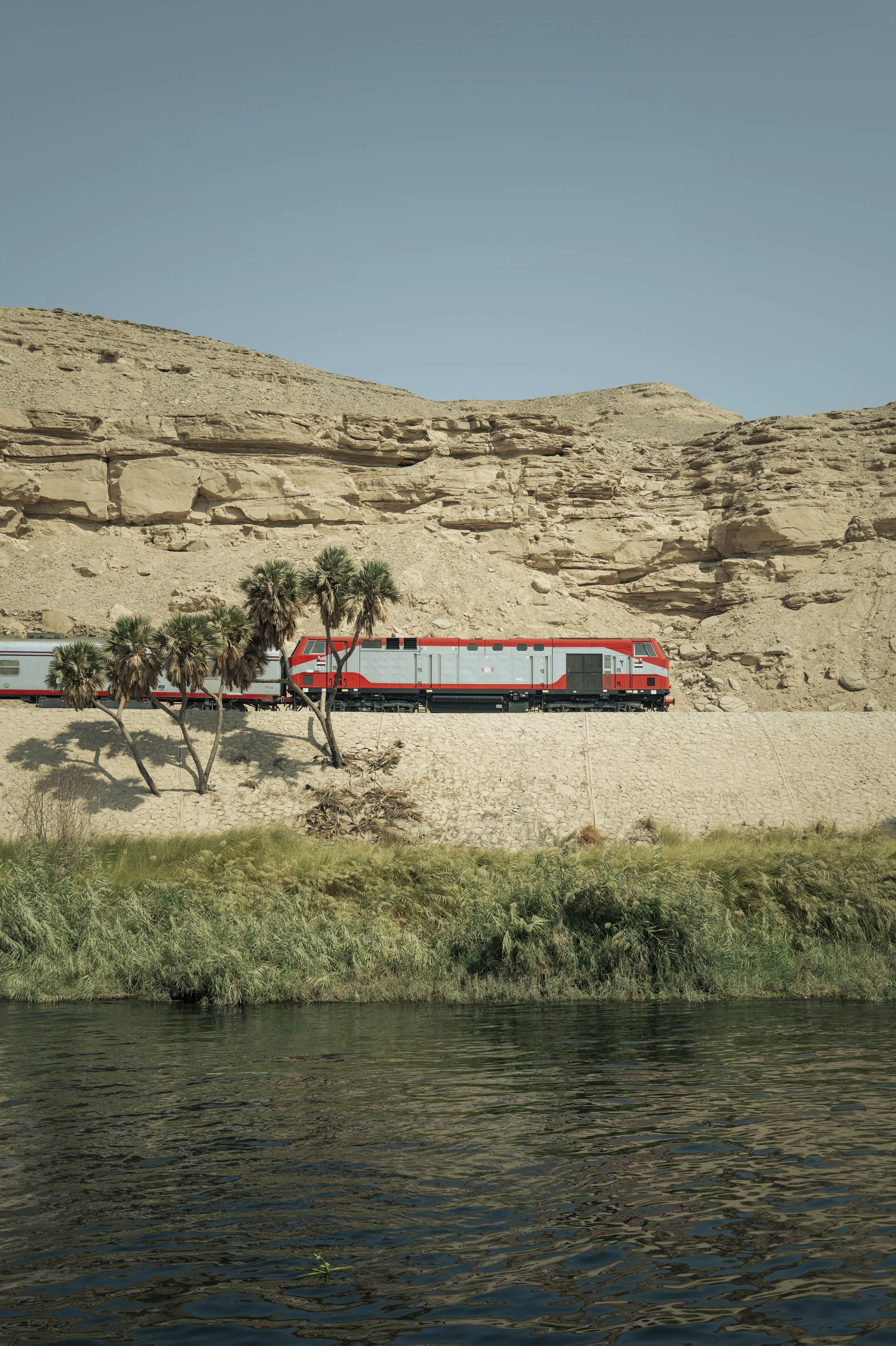
With regards to planning and booking: there is a lot of inter-Egypt travel involved in getting to and fro your cruise. As I mentioned, the trips start in Luxor which is either eight hours by car or an hour’s flight from Cairo. I would recommend the latter. But there are a limited number of daily flights between the two and with most cruises beginning on Mondays, if you are going during the holidays those flights book up FAST, so make sure you’ve secured your seats before locking in the boat. On the return, cruises end in the port city of Aswan due to the massive hydro-electric dam that blocks further travel south.
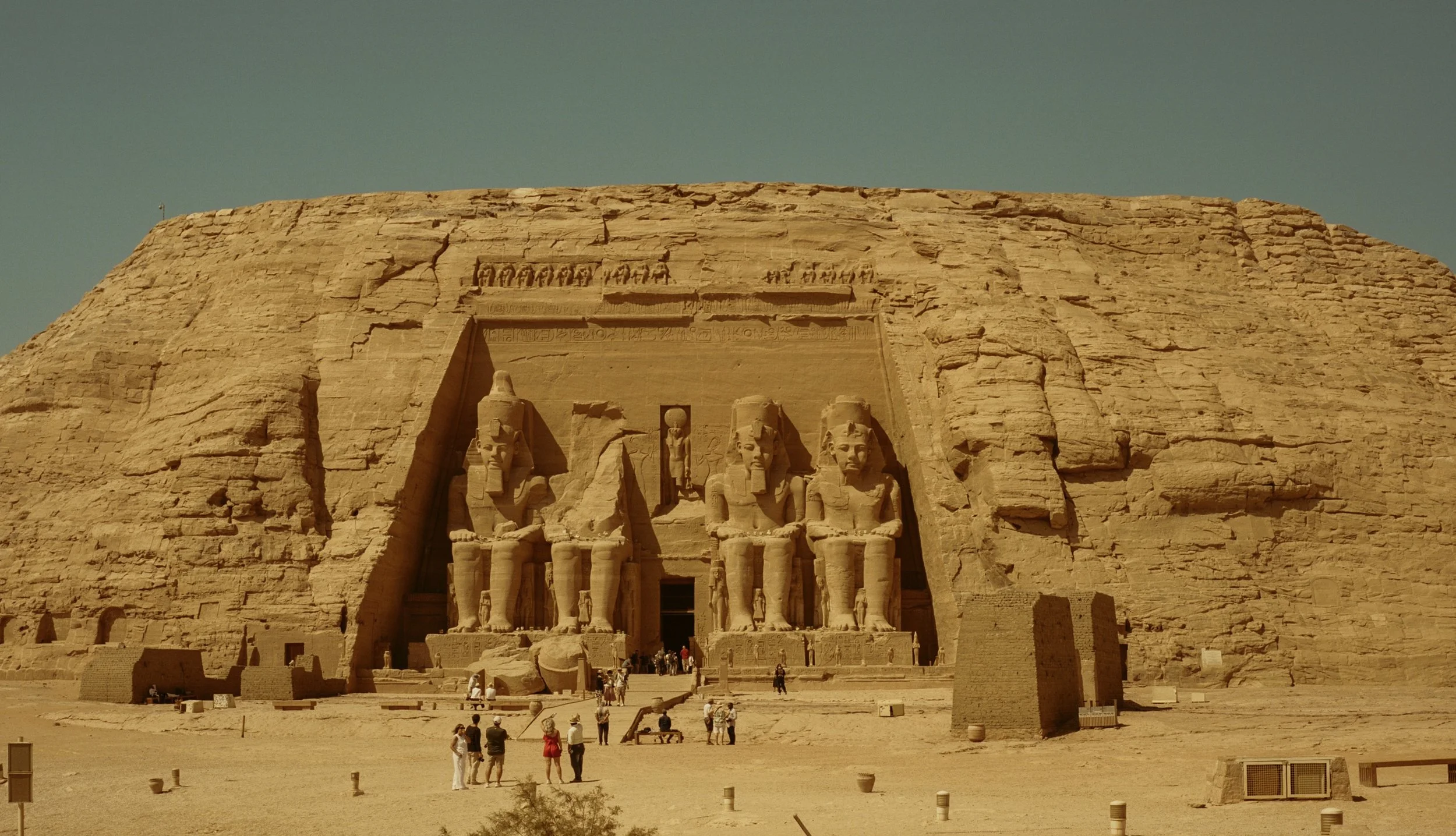
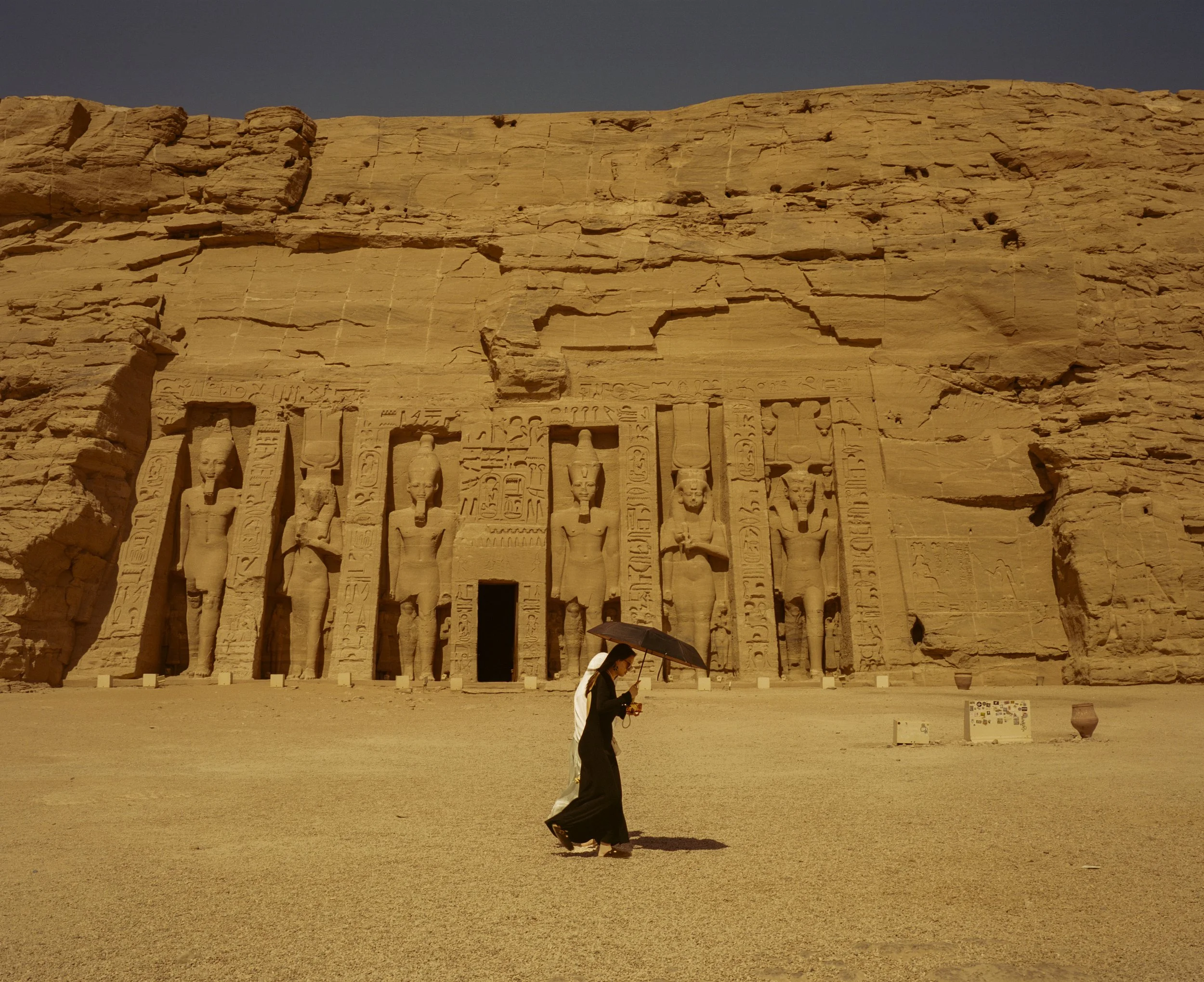
One of two breath-taking temples at Abu-Simbel
However, one of the most stunning temples, Abu-Simbel, is a half hour’s flight south of Aswan. Tacking on a visit to this final destination is a bit like adding the caviar or dry-aged Wagyu option onto a $400 tasting menu. Is it essential? No. Is it tasty? Yes. But this makes your return out of Egypt extra-grueling. I have a couple tips for you here.
For starters, don’t stay on your boat the final night. Due to restrictions and regulations, your ship will be docked unceremoniously along the side of a freeway. After sleeping for four magical nights next to abandoned beaches and sugar cane fields, this is a bit of a noisy let-down. Instead, book a room in the original wing of The Old Cataract Hotel where Christie penned her infamous novel (you can arrange a visit to her suite should you care to). I must confess this place is now run by Sofitel and can feel a bit like an airport terminal with umpteen octogenarian travelers bedecked in Ex-Officio adventure-wear, but it’s still preferable to the side-of-the-freeway boat docking.
The following morning take all your belongings with you, board the flight to Abu Simbel, have your driver (arranged by your boat operator) hold onto your luggage, take the hour-long tour of the temple, and then get on the plane that goes back to Cairo (via Aswan). From here, get a room at the airport Meridien (it’s not sexy but you’re just using it to store your luggage and take a shower before your flight), and then run into town for a final meal or a trip to the bazaar for some last-minute gifts. Your flight home won’t be until 1am (or later!!) so you can even use that hotel room for a little power nap. Fun fact: this hotel is an oddly popular wedding venue so if your flight home is on a Saturday at 2:15AM, your nap may be disturbed…
Okay, now that I’ve gotten you through all the boring stuff, let me give you some tips on the day-to-day of it all.
For starters, at the same time as you book your myriad of flights and boats and rooms and more, make sure to pick up a copy of Peter Hessler’s The Buried. For twenty years Hessler was The New Yorker’s China correspondent until one day he and his wife decided on a change of scenery for themselves and their two young daughters. They’d always been interested with the Middle East and Egypt’s rich history felt like the perfect place to land. They just happened to land there weeks before the Arab Spring. Hessler wound up diving head-first into the politics of the capital while also road-tripping across the country to travel back in time several millennia to understand how the country came to be where it is currently. The resulting book is fascinating and an absolute must read before your trip. I cannot recommend it highly enough.
I would start your trip with two full days in Cairo, followed by one in Luxor. Book yourself a river view-balcony room at the Four Seasons Nile Plaza (there are two FS properties in town, but you want this one), it’s the least run-down hotel in town. I would also avoid a guide in Cairo. You can read up on the pyramids beforehand and the museums are self-explanatory. If anything, a guide will weigh you down (more on that later). But definitely arrange a driver from the hotel for the day.
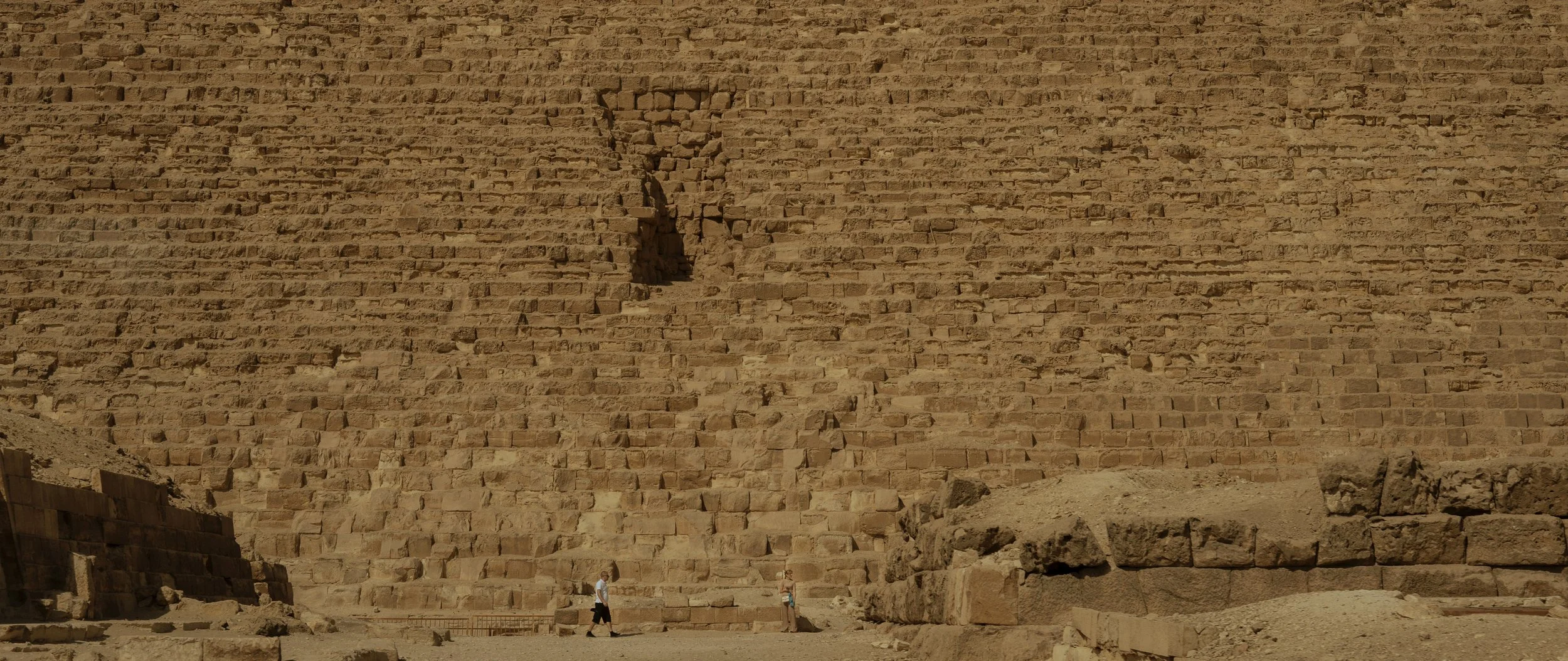
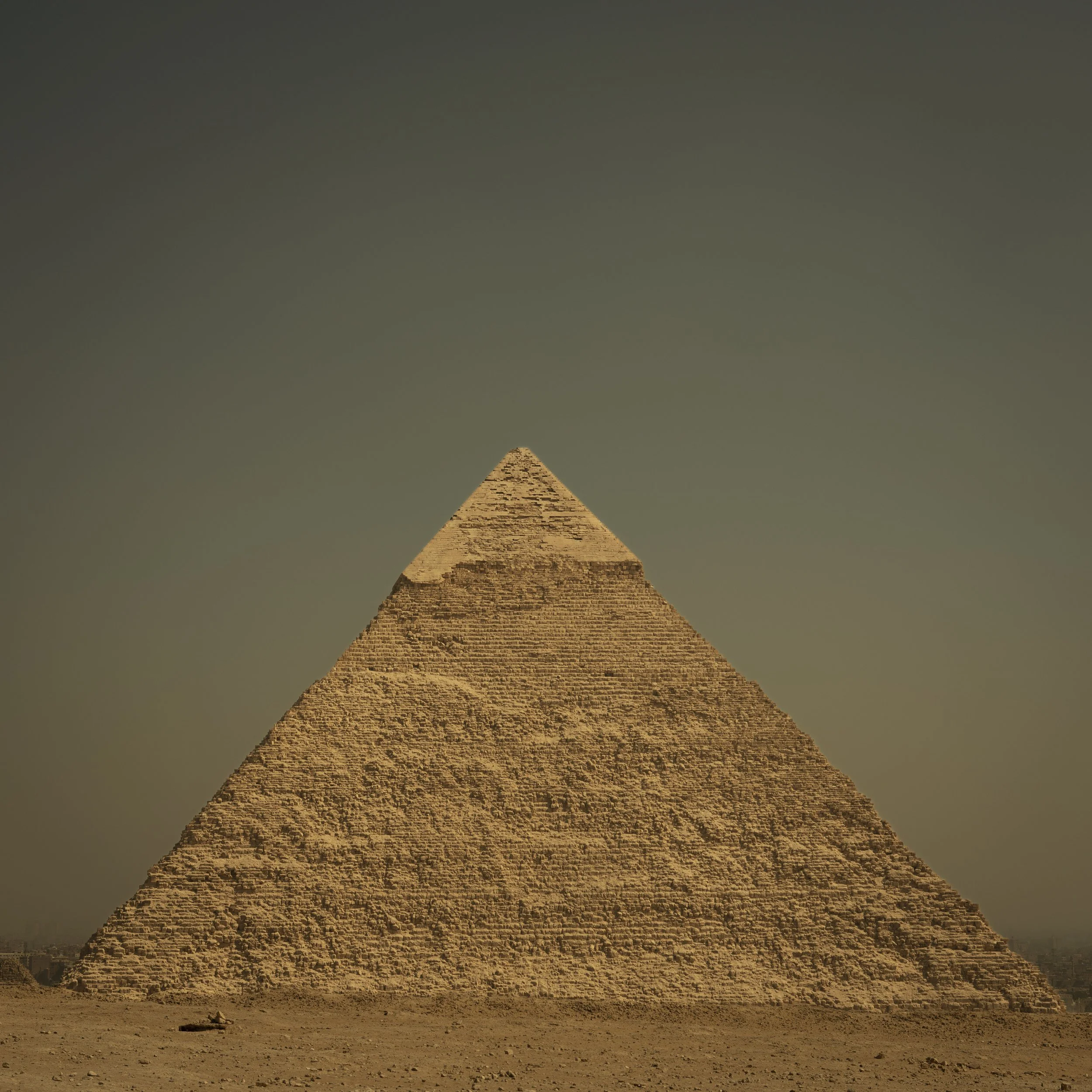
At the base of the Great Pyramids, the sense of scale comes fully into focus…
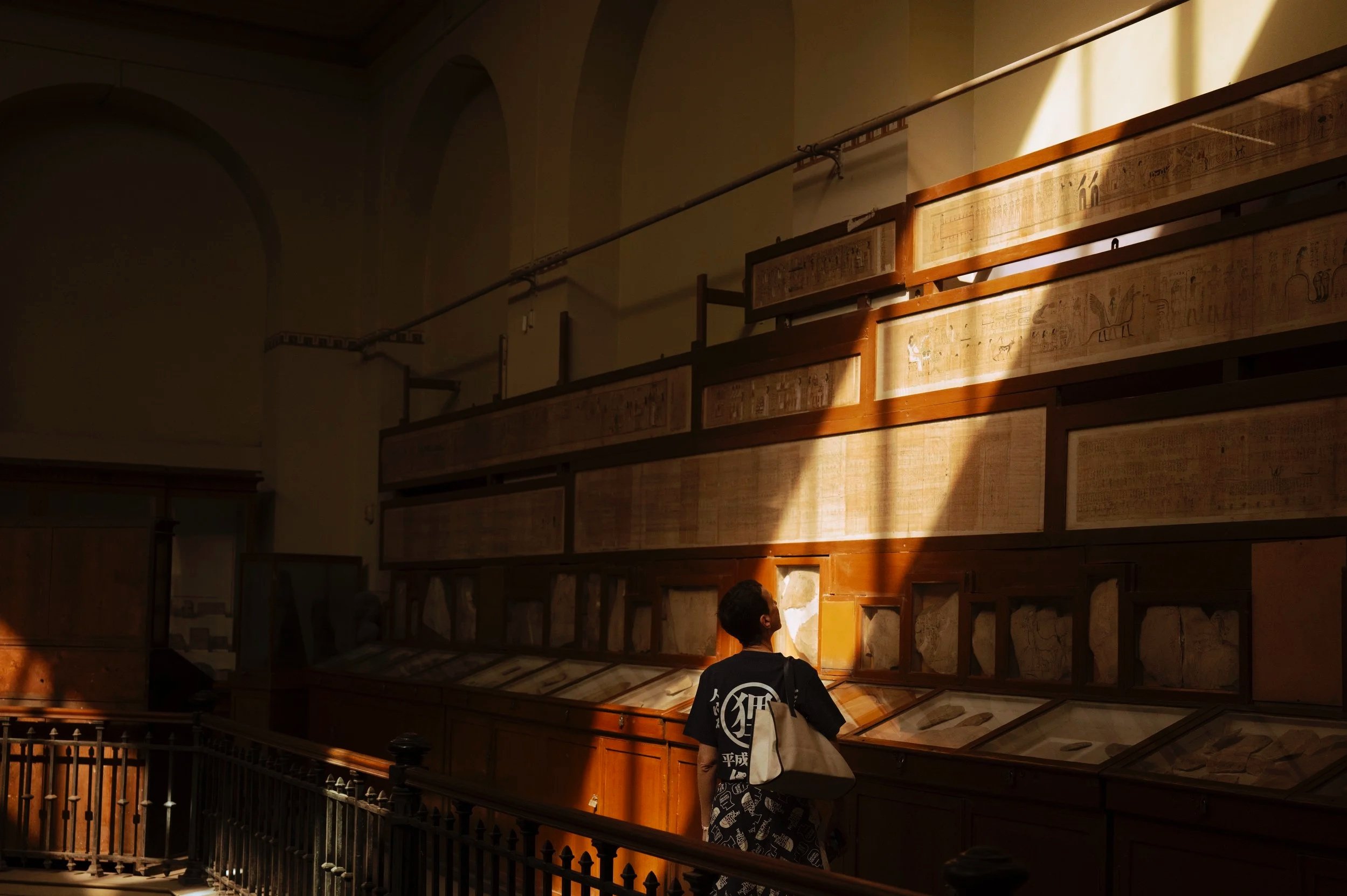
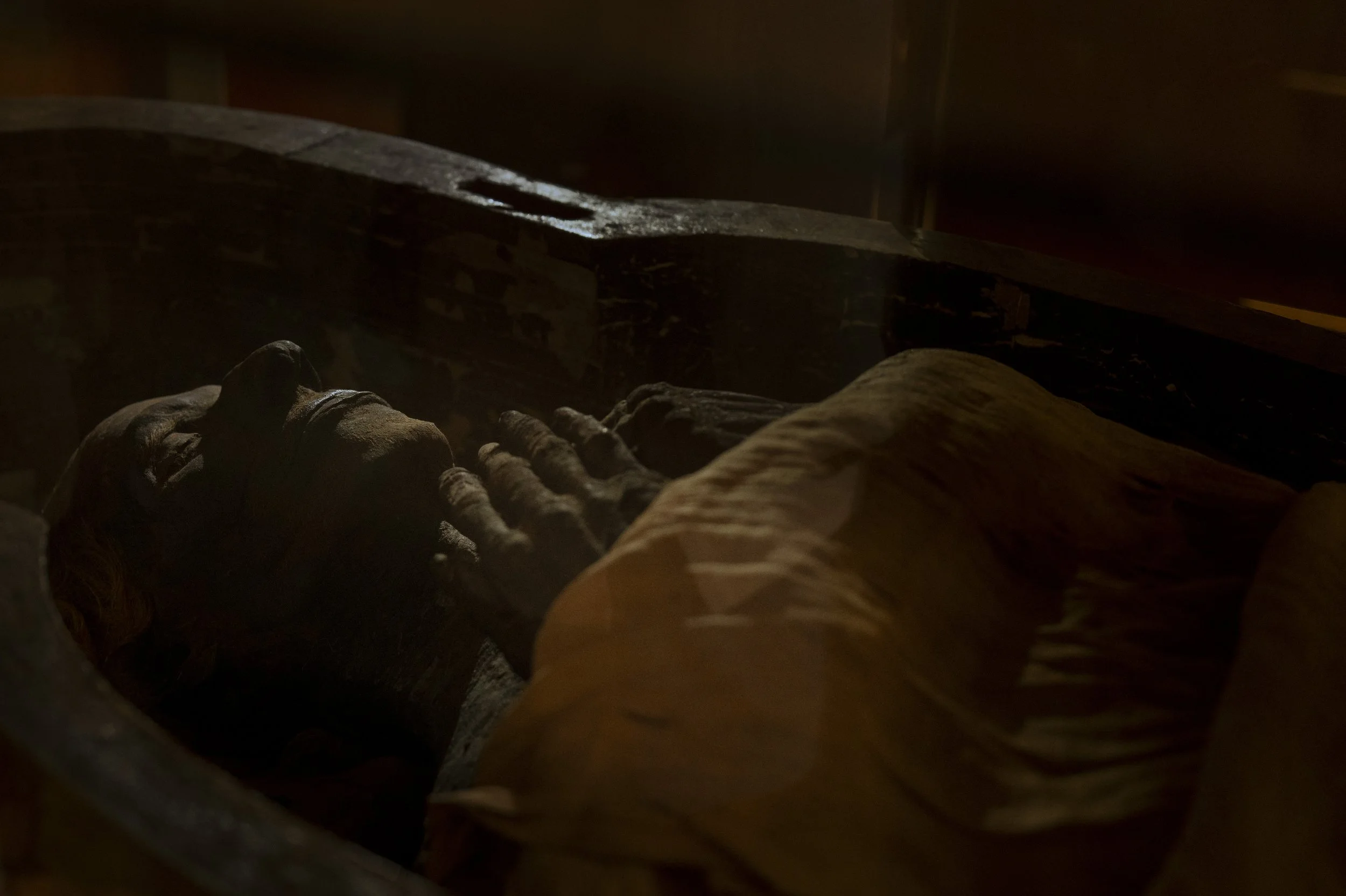
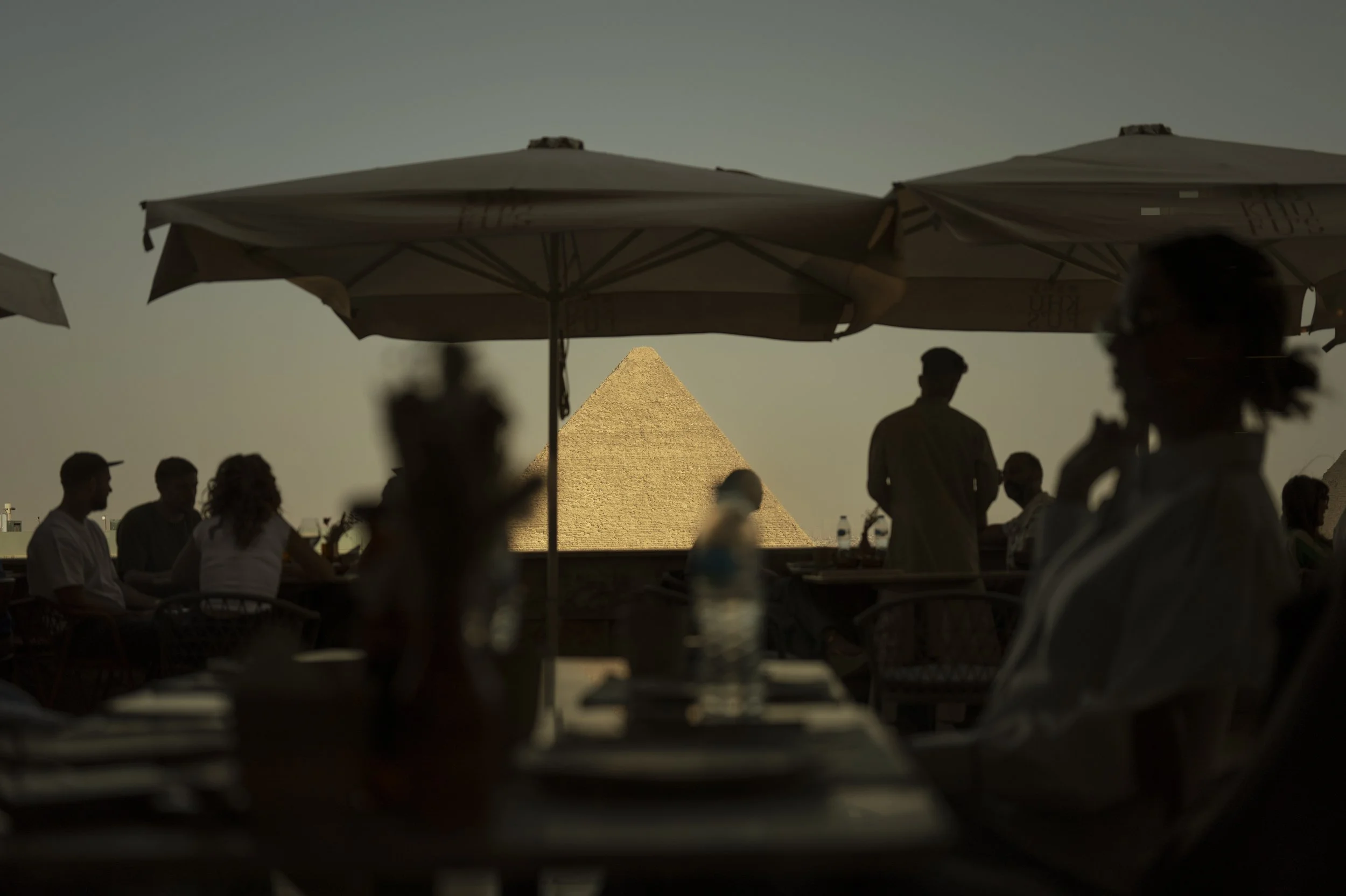
On your first day, get the sights out of the way. Head to the Great Pyramid at the crack of dawn. I personally would have loved to go in late afternoon to catch the structures bathed in golden light but the grounds oddly close around 5p on most days. So get there early and if you’re still roaming around at lunchtime there’s a very good restaurant on the grounds called Khufu’s (book ahead). From here, you can either go to the brand new Grand Egyptian Museum facing the pyramids or the old one on the other side of the river. The new one does indeed look impressive (we missed its opening by three days!) but here’s the thing: you’re about to embark on a week of visiting original temples, tombs, and more that have all been immaculately preserved. You’ll be witnessing history fully in context, the sun beating down on you just as it did six thousand years ago, your fingers running along stone carved several millenia before Christ (that alone is just a bewildering fact to wrap your head around. I mean the Greeks and Romans referred to the Egyptians as “the ancient civilization” for Pete’s sake!!!). To see artifacts taken from these same sites and plopped into a contemporary setting, out of context, is just weird. These relics weren’t meant to be here and you feel it in a way. At least the old museum has a fun, Indiana Jones/Harry Potter haunted and decrepit vibe to it. And with the new one open, it will surely be deserted (and looted of most of its prized possessions which will only add to the fun.
Allow your second day to be more laid-back and feel like a local. A few places to check out are Cinema Radio for its beautiful architecture and mix of shopping and cafes inside, Café Riche for its Wes-Anderson-esque signage and strong coffee, the iconic Khan El-Khalili bazaar, and at night the Cairo Jazz Club is a great place to catch a set. Culinary-speaking, the options are limited. Let’s be honest, you’re not going to Egypt for the food. You know it, they know it, there’s no restaurant here that I’m going to declare you must visit. As my friend Sabrina would say, it’s not that kind of party. But who cares, the country has so much else to offer, is it the end of the world if you don’t photograph some fucking pastry that you then passively share with everyone else online to prove you ate it?
Catch an evening flight to Luxor that second day and ensure that you have booked a room at Al Moudira, the only nice hotel in town. In fact, it’s a bit out of town and that’s what makes it so special. Evoking a style straight from Marrakesh, the spacious rooms feature beautiful tilework and the grounds are a haven of peace, a welcome respite after a day of sightseeing with the masses. In fact, an ice cream by the pool is the perfect reward for a day packed to the gills with adventure. And it will be packed, I guarantee you.
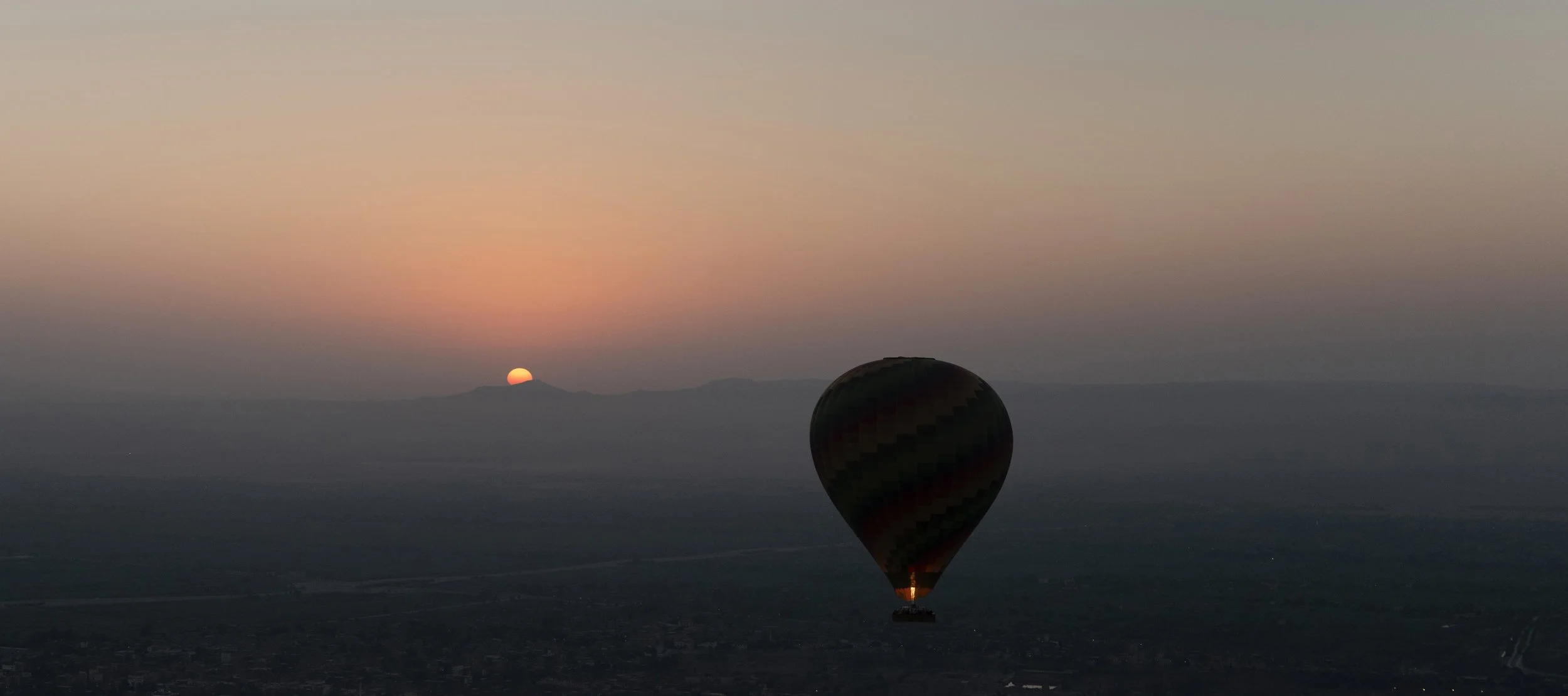
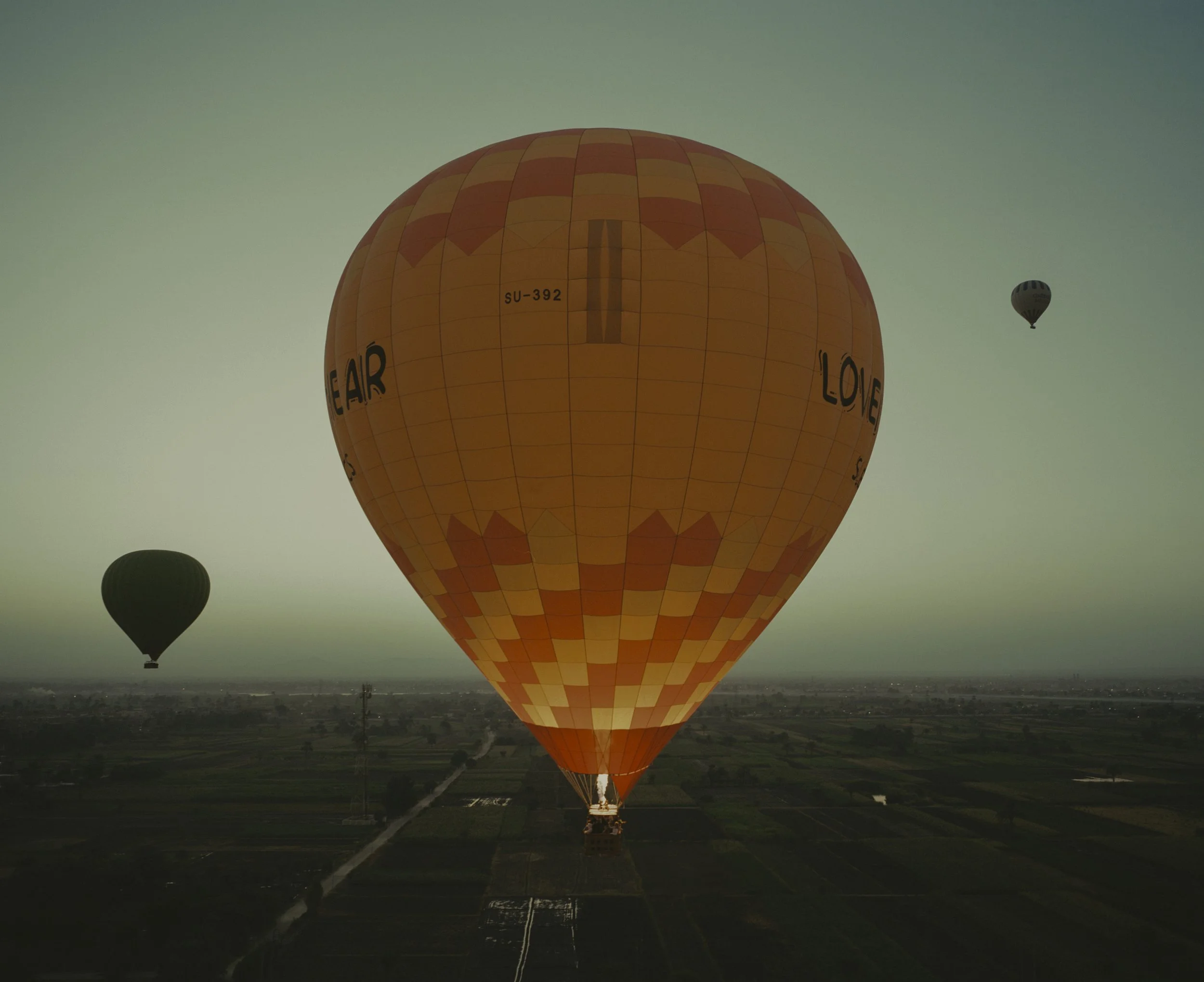
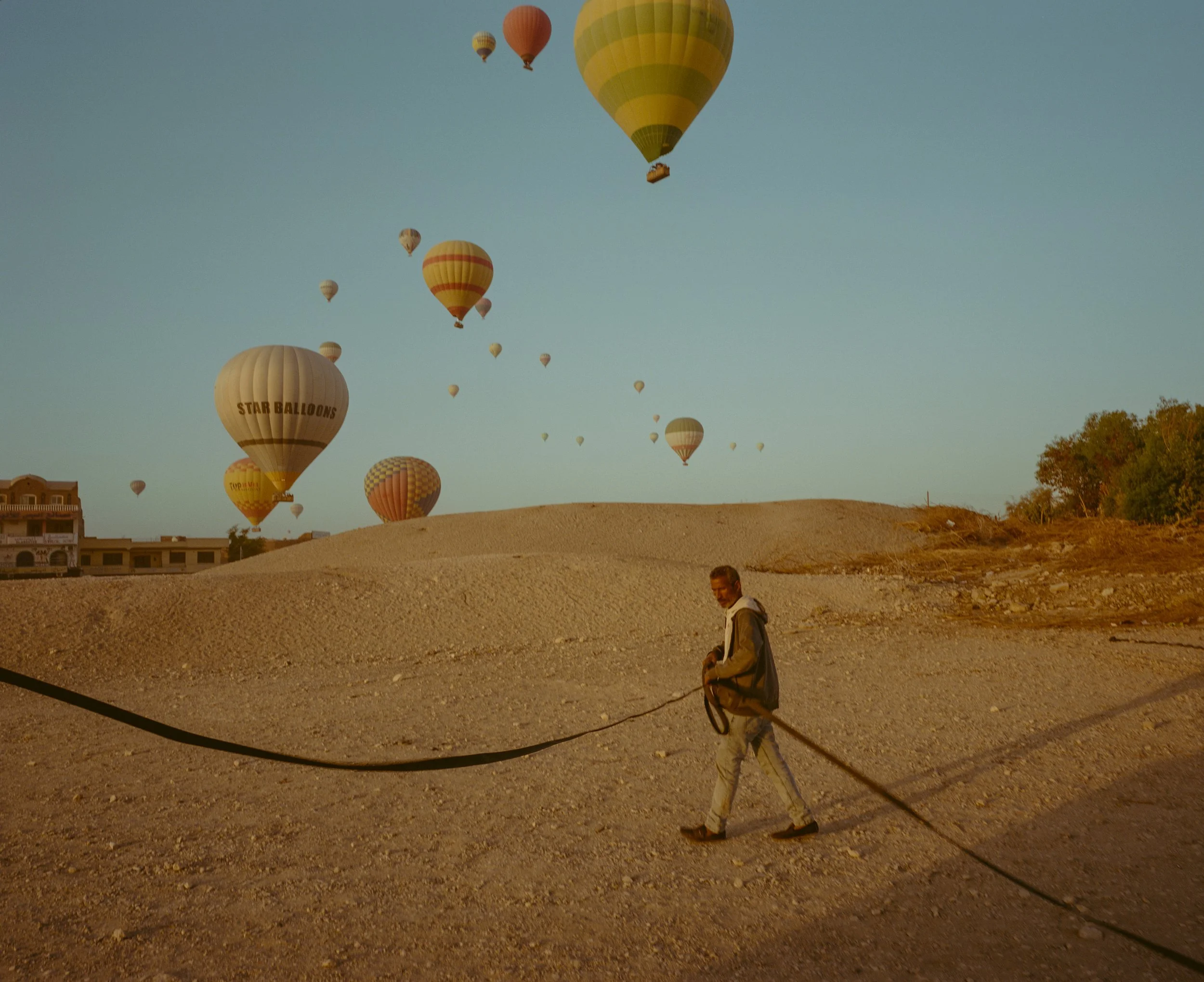
Start with a hot air balloon at sunrise, arranged by the hotel. It will entail waking up at 5:30 to be out the door by 6, but I promise you its worth it, if not for the ride itself then for witnessing the organization and synchronization of forty balloons taking off simultaneously (don’t think you’re the only one who had the bright idea to do this).
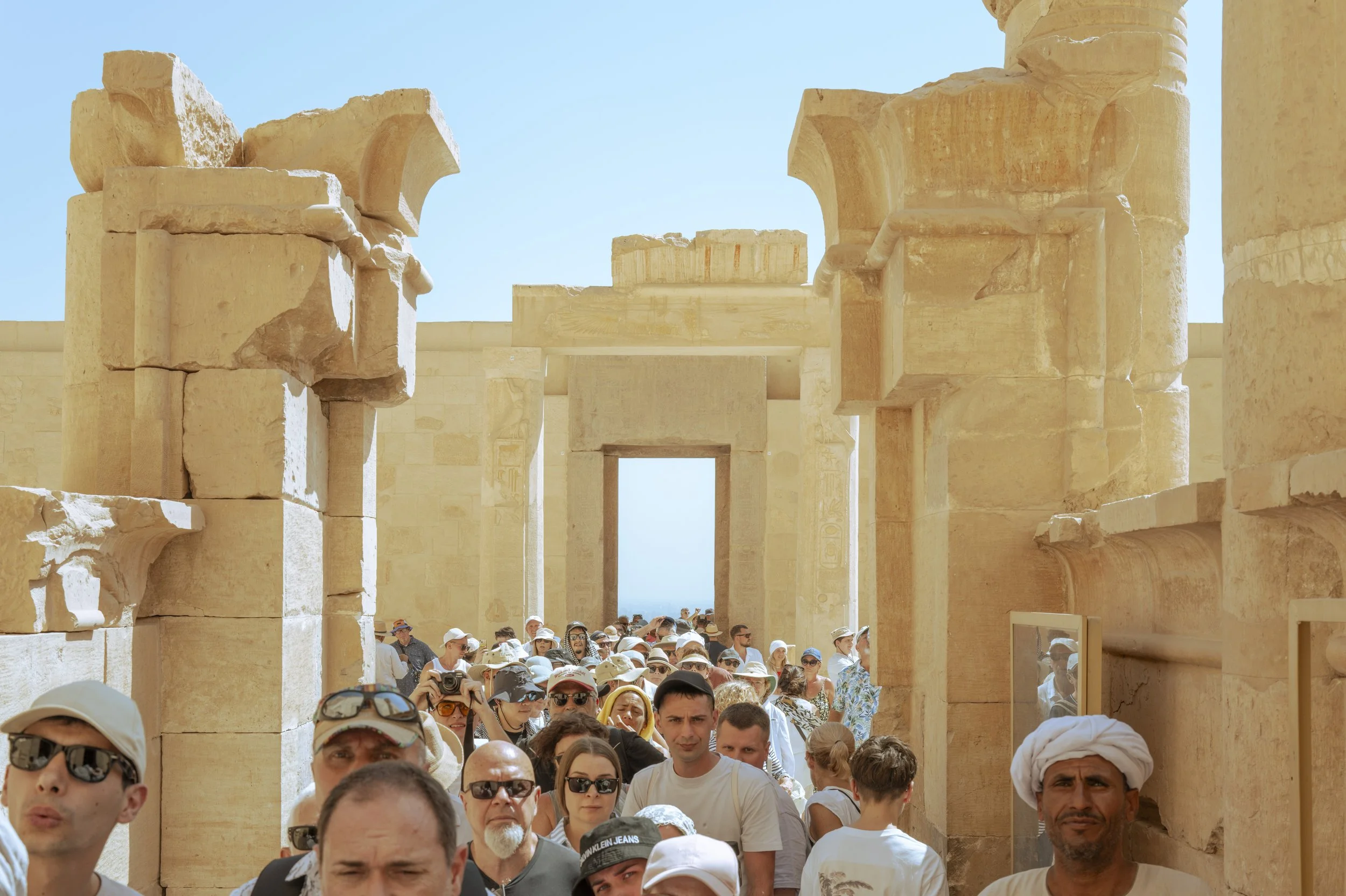
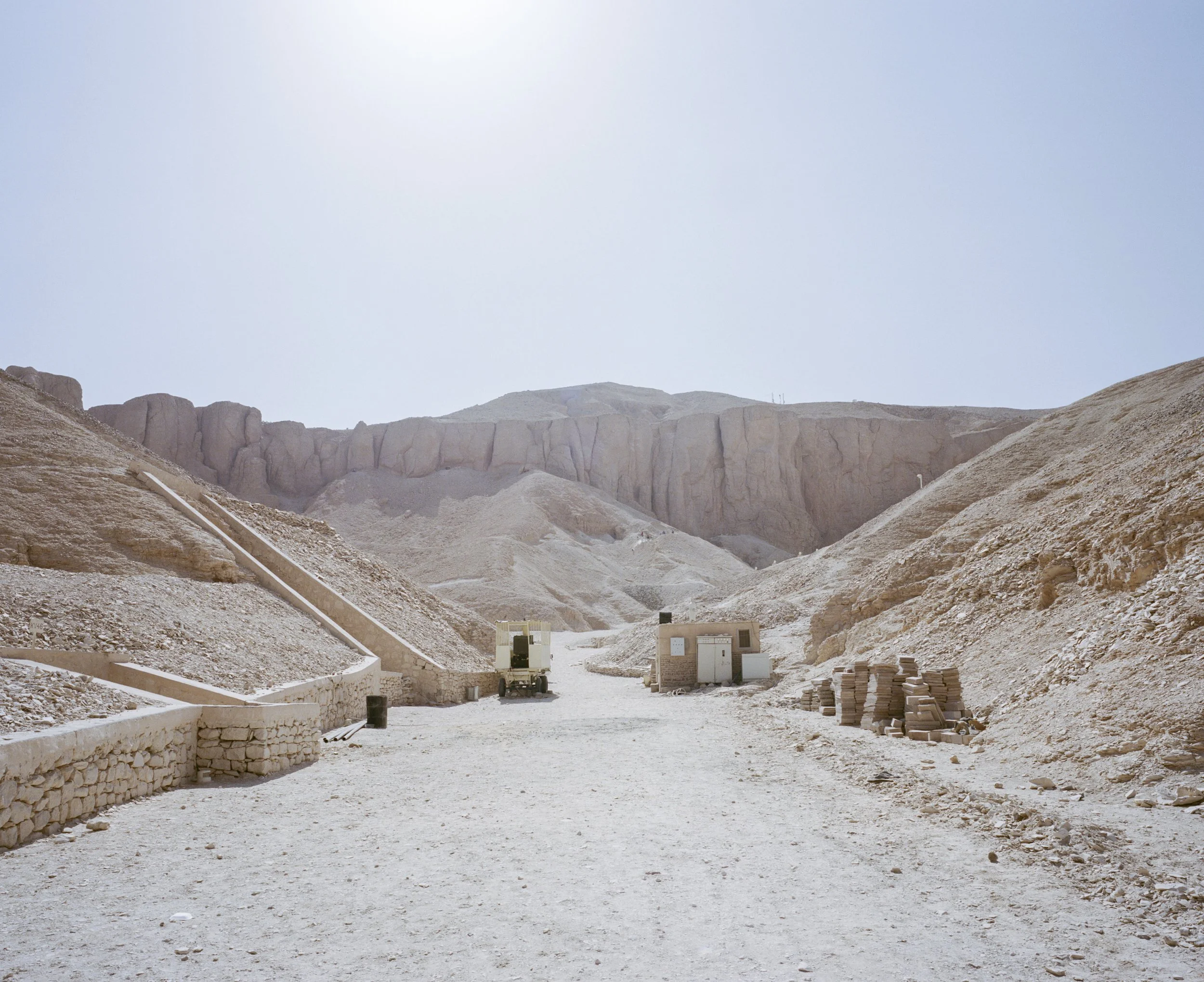
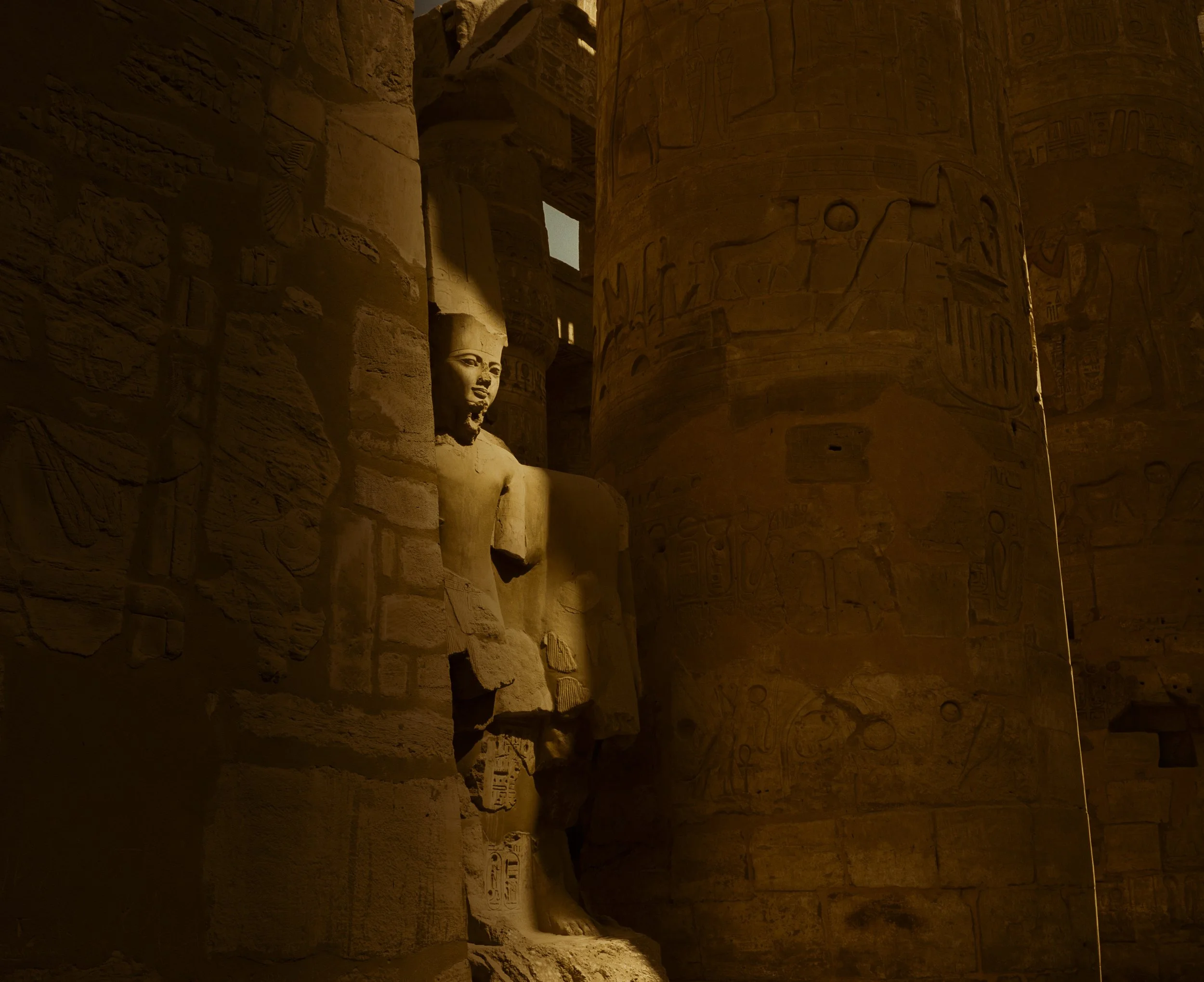
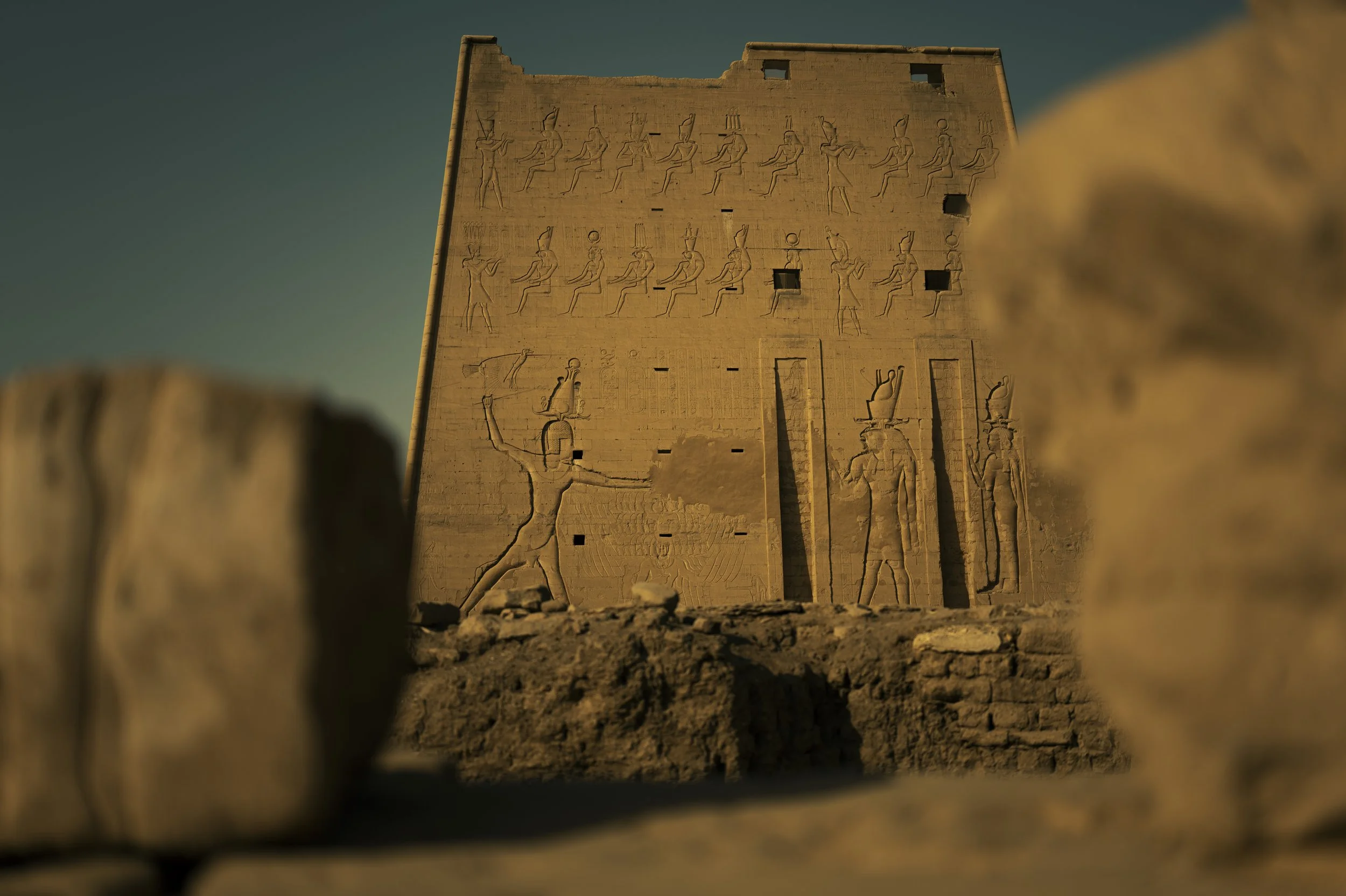
From here, you can go back to the hotel for breakfast or start in on the sightseeing (this time with a guide that the hotel can also arrange), and hit up the Valley of the Kings, a network of the most famous tombs erected across a series of nondescript chalky white hills. Continue onwards to the Temple of Hatshepsut, and finally cross the river and check out the Temple of Karnak. This was one of the highlights of the entire trip for us. It’s really breathtaking and a good teaser of what’s to come. There is PLENTY more to visit in Luxor (the Valley of the Nobles, The Temple of Luxor), but frankly this is already a lot to do, you will be wiped out, it will be hot, and you will have five more days of this. So pace yourself, enjoy the swimming pool (it’s the last time you see one for awhile and you’ll regret it in this heat), and the pretty decent menu at the hotel. Oh, one last tip for the Al Moudira: they offer rides in their fleet of vintage 1930s Mercedes limousines which look incredible and definitely harken back to the times of Indy, but know that friends of ours opted for this service and wound up stranded at nightfall in the middle of nowhere for three hours when the picturesque car unceremoniously broke down.
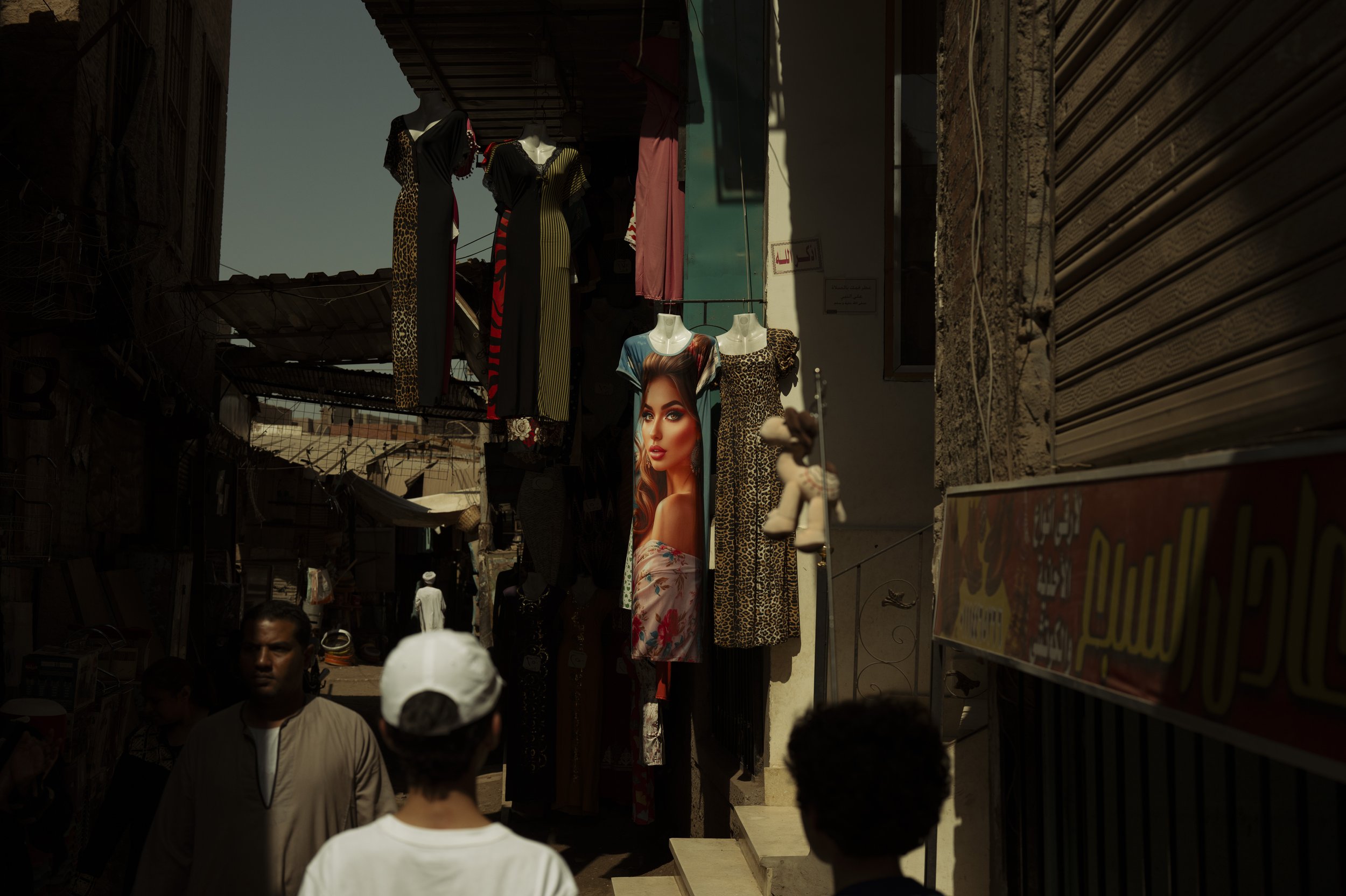
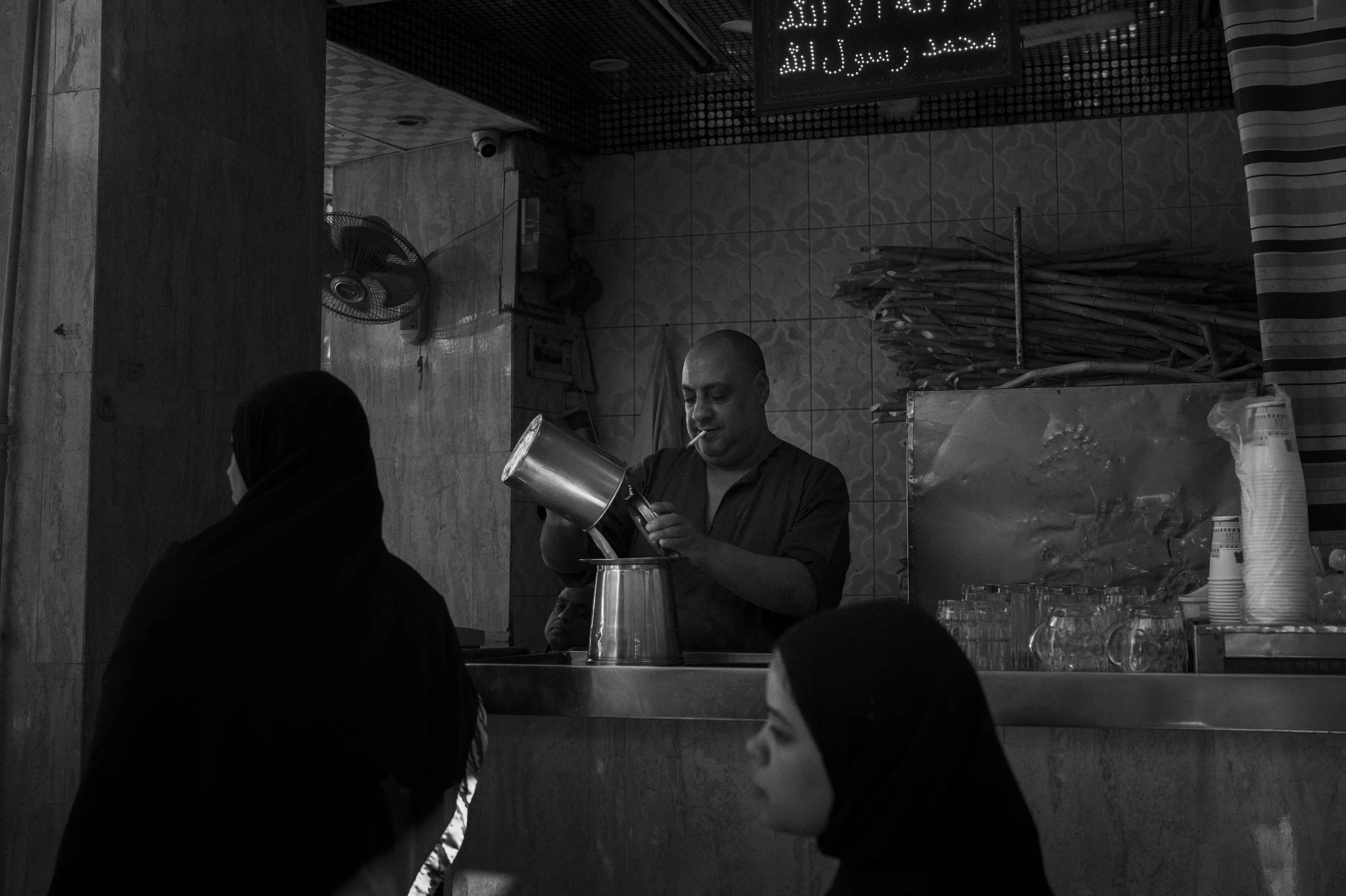
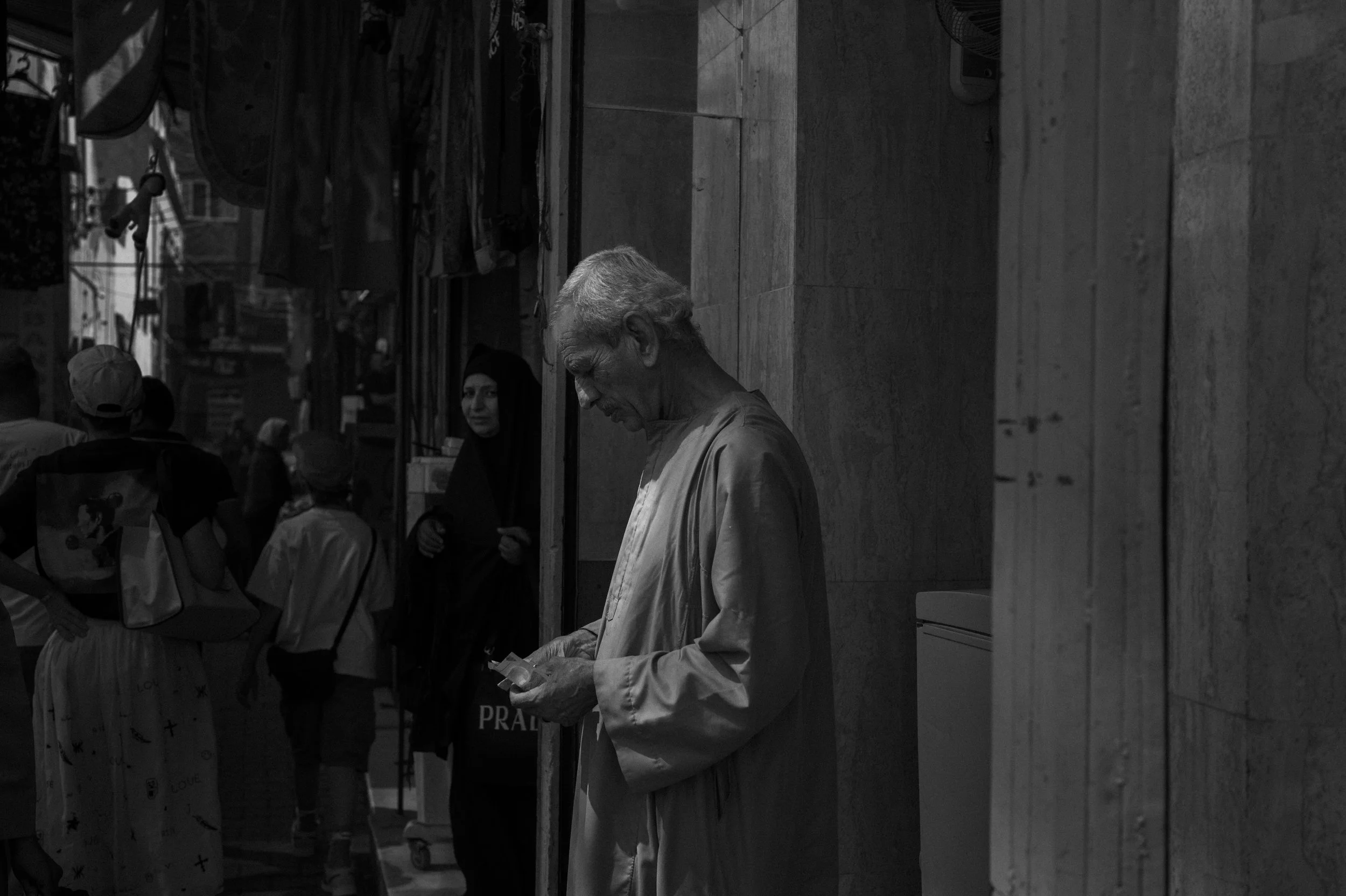
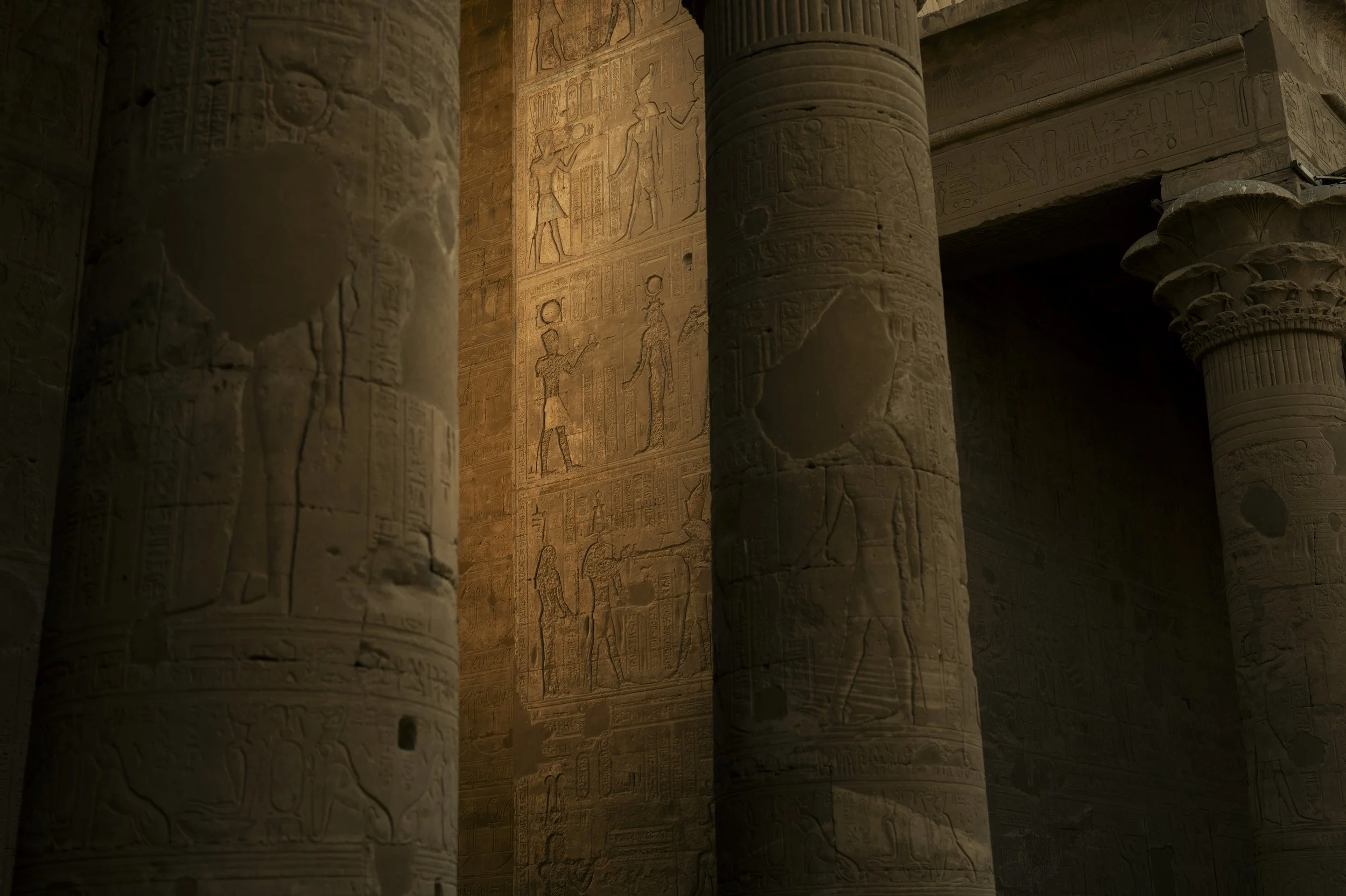
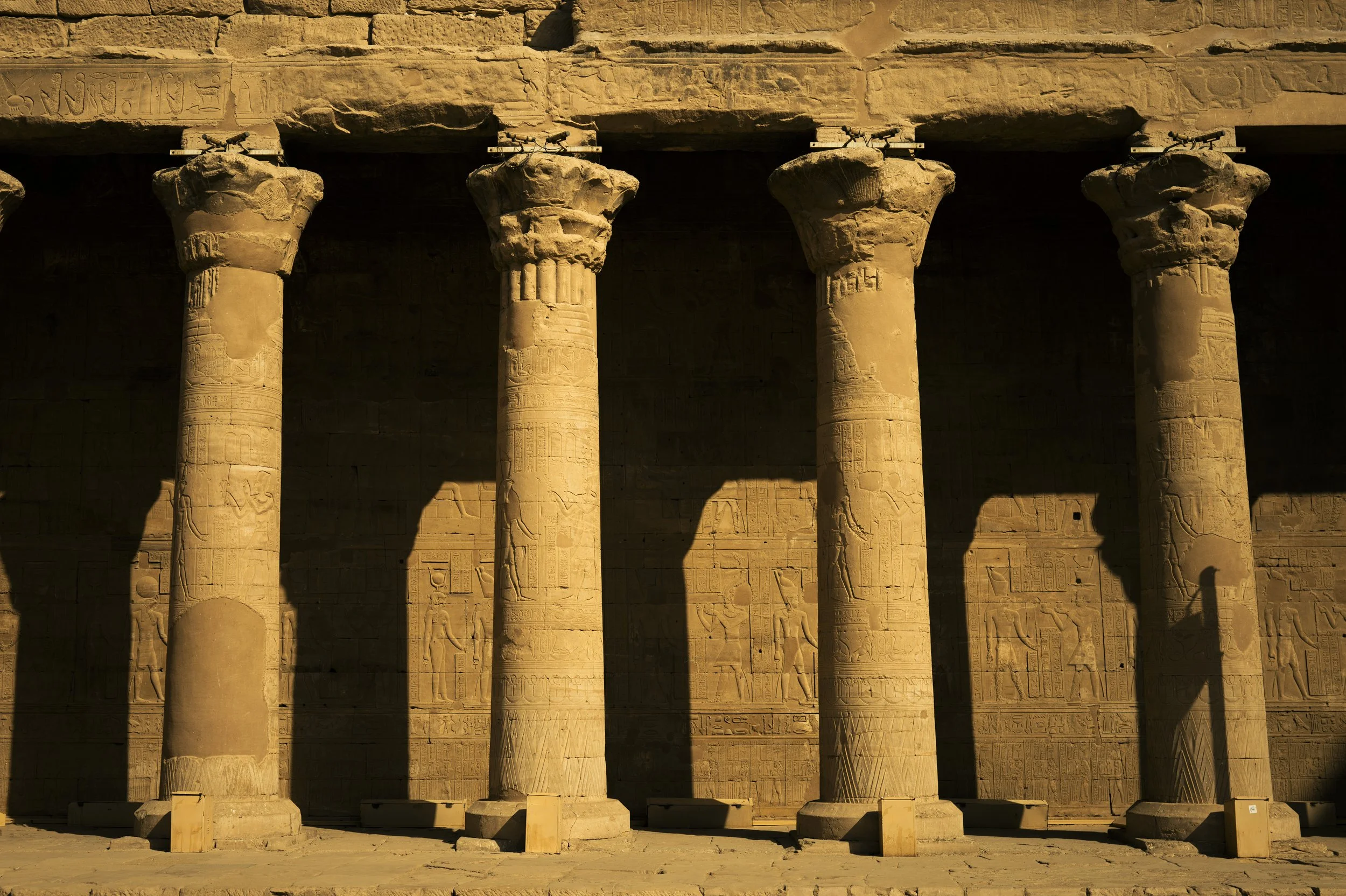
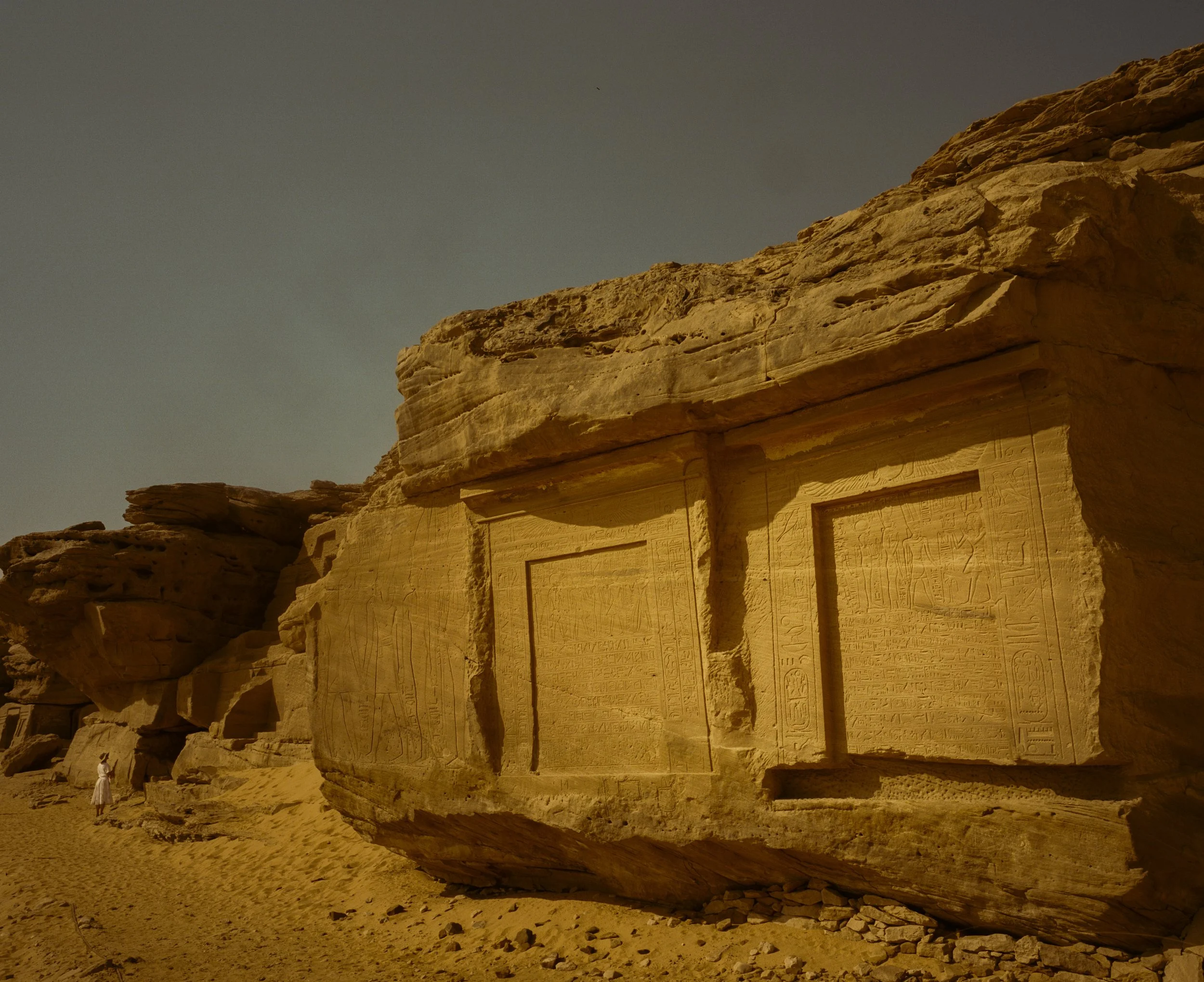
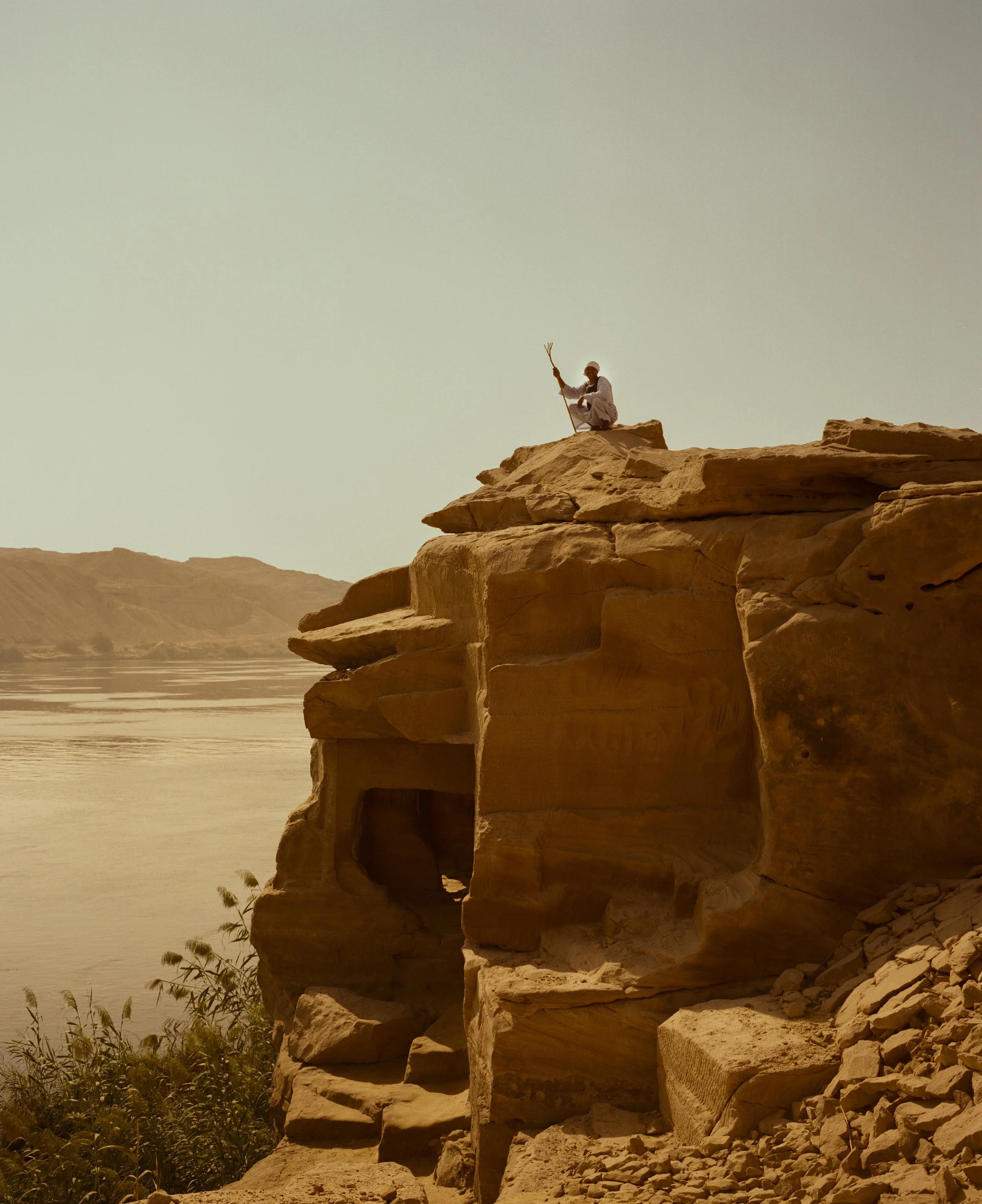
The following morning you’ll get onto whichever boat you were lucky enough to book and at that point, the itinerary will be dictated by the operator. One last note though about this journey though that does not come across in the images I’ve attached, and I feel no one brings up when recounting their time there. It’s something that really rubbed me the wrong way and left me a bit un-fulfilled after our trip. If you wind up booking the private boat I recommended, it’s perhaps something that can be addressed on Day 1 and never become an issue.
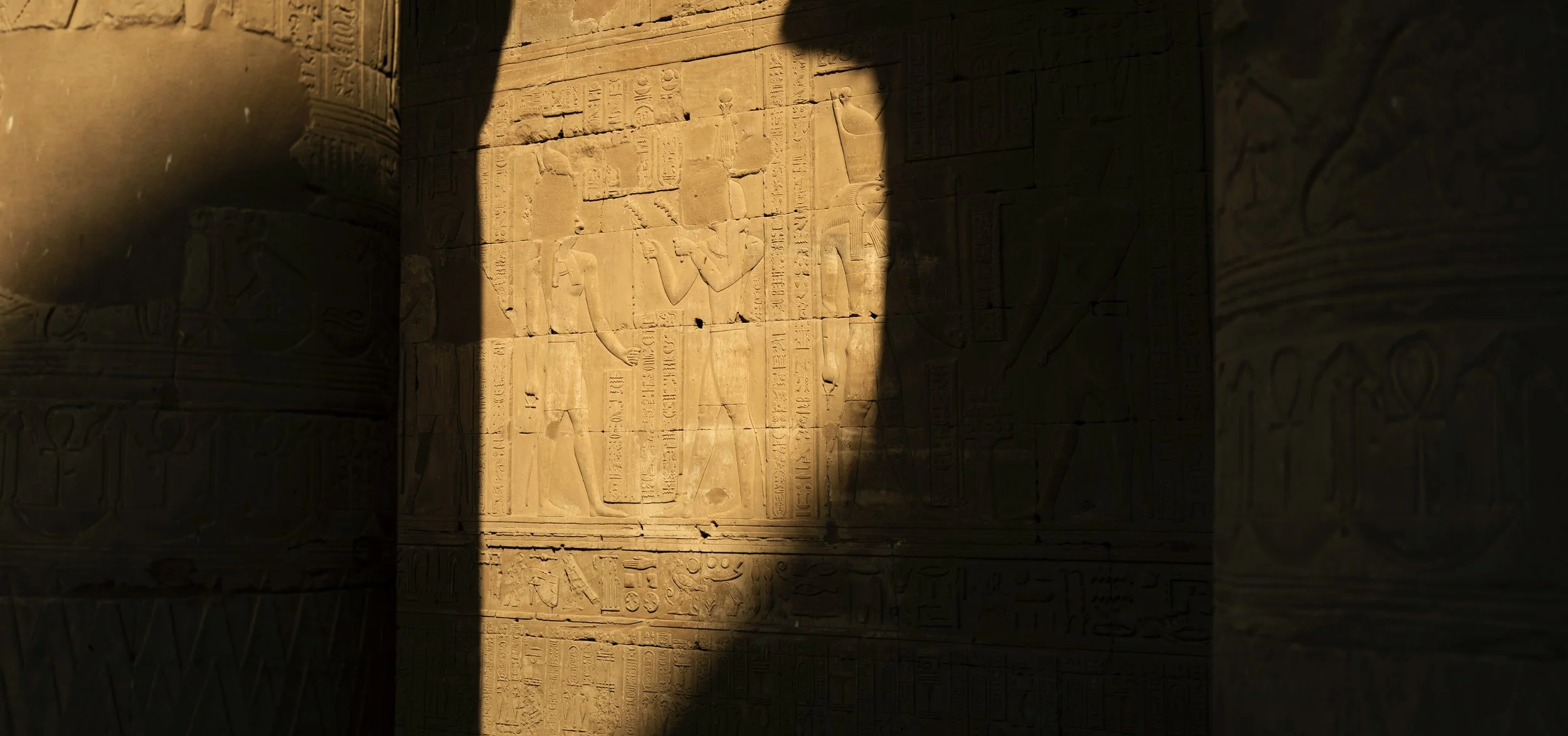
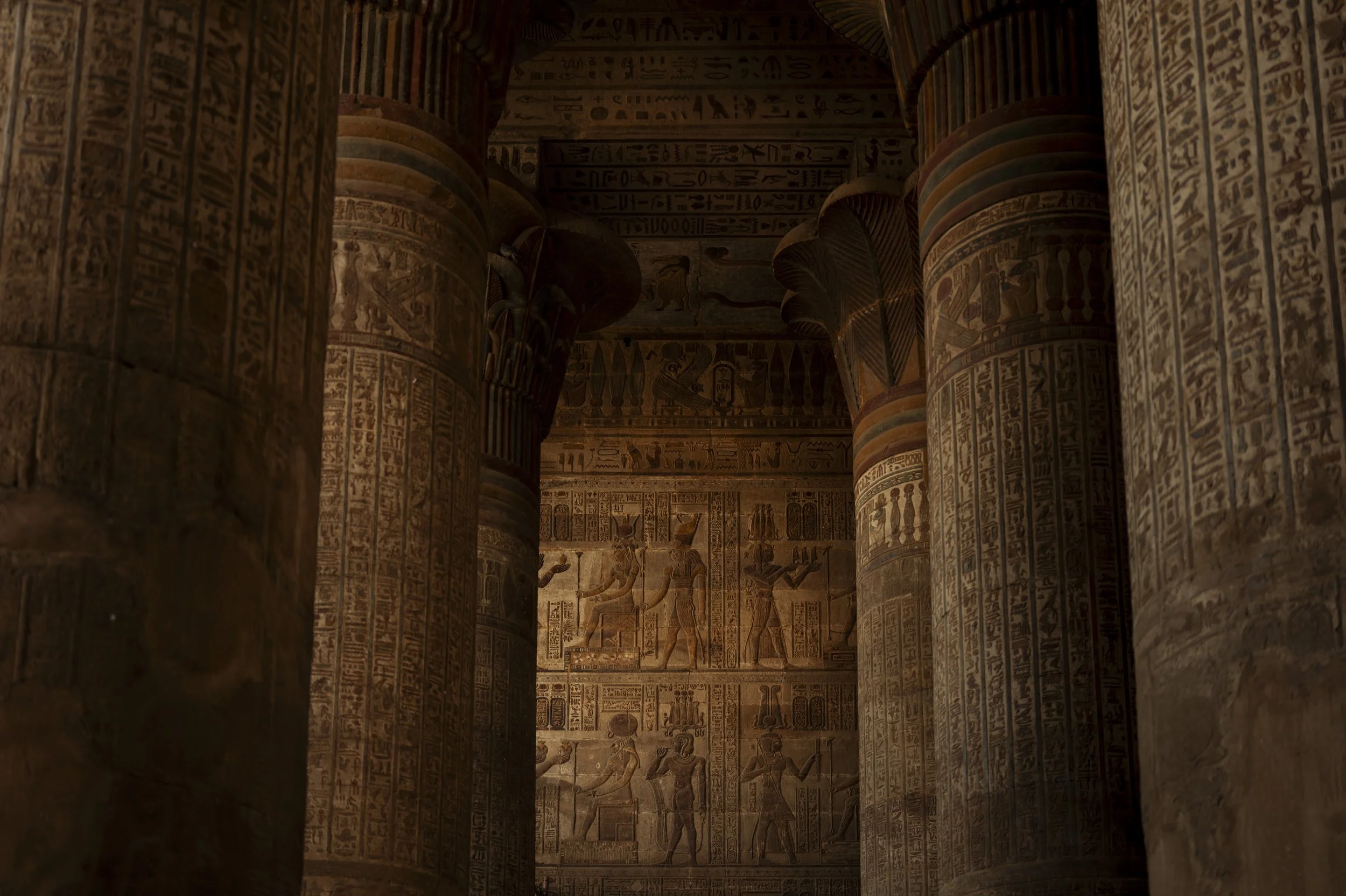
There is sooooo much deep, rich history contained within the sites you will visit and the tour guides arranged by the boat will spare no detail in conveying this history to you. It’s overwhelming and unless you are a true historian or passionate devotee, frankly it’s beside the point. Three weeks (if not three days) after you return you won’t remember Ramses II vs. Ramses IV or if Hatshepsut was before or after Tutankhamen. And it doesn’t matter. When I was winding my way through temples, observing shadows of the sun on the hieroglyphs that resembled markings from a distant alien planet, I wanted to find a way to connect emotionally and spiritually to this completely foreign time and place but I found it absolutely impossible with a guide constantly prattling off rote facts and figures in a monotonous drone that itself felt mummifying. And we were fortunate to have someone who was only guiding our family and friends of ours, I cannot imagine what it would be like with the groups of 200 from the larger boats. I had to escape from time to time, slip past the hordes of other tourists, take a wrong turn and go down a little corridor to find myself alone for thirty seconds and try to soak in as much as I could on my own before being reprimanded for leaving the group.
All this is to say, it’s a visceral, visually stunning trip, one for the books, but it really takes an extra amount of effort (and money) to be able to enjoy it on your terms.
Oh, lastly…The woman who founded the boat company we were on was a weather-beaten French expat who’d been down in Egypt for thirty-odd years and swam in the Nile every day. In fact, when we opened our blinds in our room the first morning—before I’d put on my glasses—I was surprised at a large piece of debris floating past our window, only to discover it was this lady, drifting down the river at a rapid rate. She swore by this ritual, and explained that in all the years of organizing cruises, not a single passenger ever got sick. With the temperatures peaking around 103 daily, with no pools in the vicinity, and no other afternoon activities planned, I chose to accompany my son for daily plunges. The water was cold and invigorating and the current so strong that it was a fun challenge to jump from one boat and slide down to another, latching on to a rope-ladder at just the right moment. But the stomach issues we both faced and the pink-eye he incurred on our return should be mentioned as a warning that this woman was full of shit. After a week of woes, we weren’t.
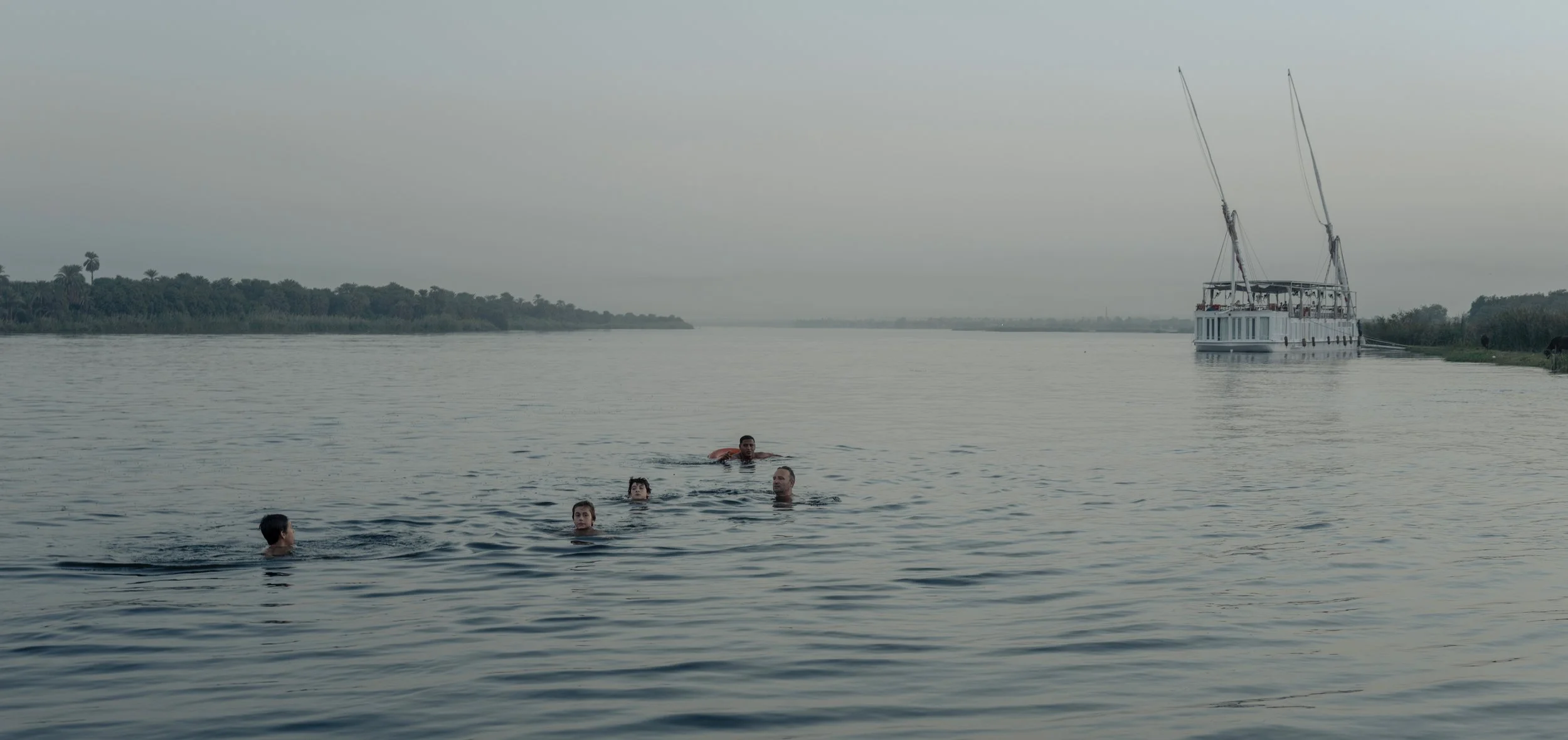
Swim and cool off at your own risk…